
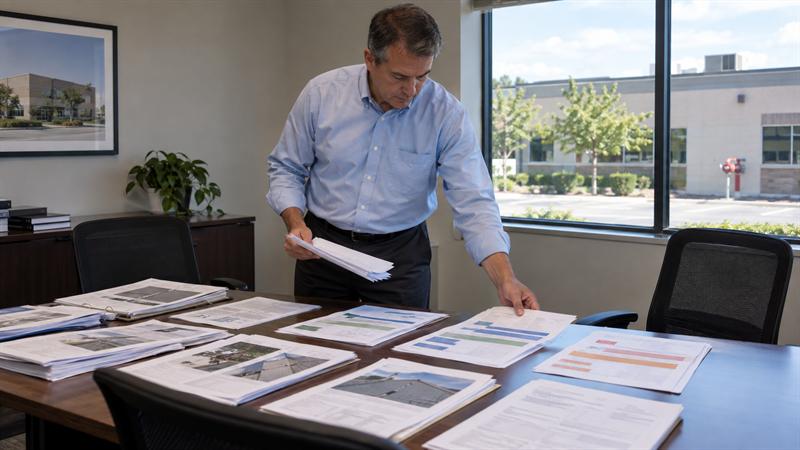
A stronger commercial property insurance quote starts before the request is sent. The underwriter needs a physical description of the property, a valuation that supports the limits, a loss history that explains the risk, and any lease or lender obligations that shape the policy.
Use this checklist before requesting coverage for an owner-occupied business, leased commercial space, warehouse, retail location, office, or mixed-use premises. It is especially useful when a renewal, lender requirement, lease milestone, or renovation makes the quote time-sensitive. For a broader look at building, contents, and business income protection, see commercial property insurance.
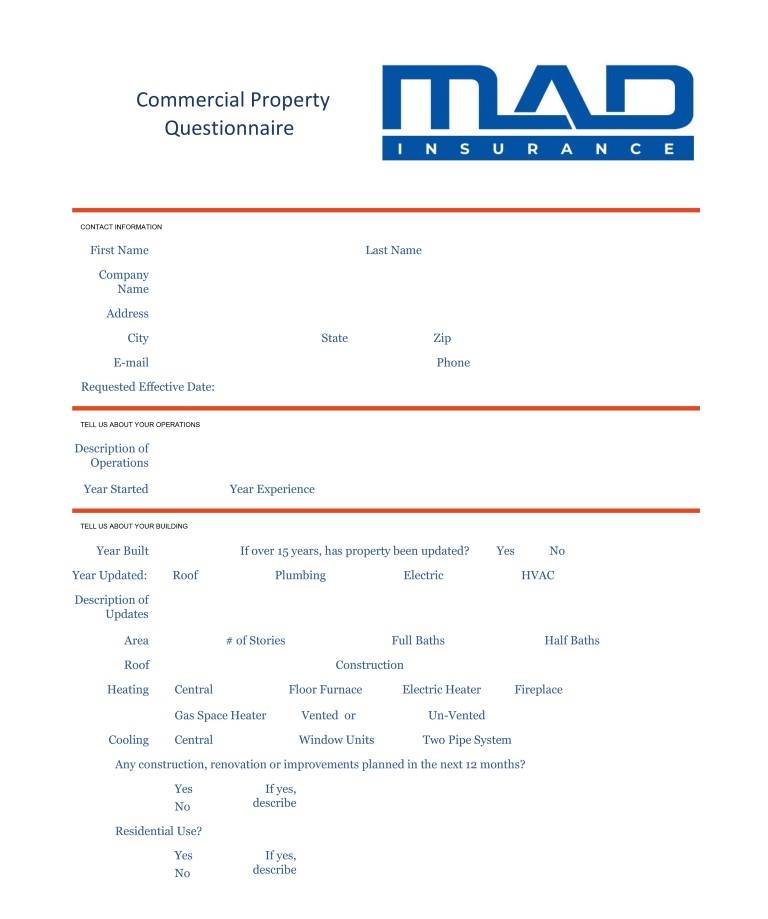
What to Include in a Commercial Property Insurance Quote Request
A complete quote request is a property profile, not only an address and square footage. The items below help an underwriter classify the risk, select the right form, and set limits that can be compared across carriers.
Business and property identification
Start with the legal business name and entity type, such as an LLC, corporation, sole proprietorship, or partnership. Include the property address, suite number, and a short description of the space. State whether the business owns the building, leases the space, or uses a mixed ownership structure. Add the date the information is current and the expected effective, renewal, or project date.
Building and premises details
Underwriters need a physical and operational picture of the property before they can classify the risk or price the coverage.
- Square footage for the building and, if applicable, the leased suite or premises.
- Construction class or type, such as wood-frame, masonry, steel, or fire-resistive.
- Building age and the year of the last major structural update.
- Roof age, roofing material, and the date of the last inspection or repair.
- Fire protection features, including sprinklers, alarms, dry chemical systems, and standpipes.
- Security controls, such as cameras, gated access, motion sensors, and commercial-grade locks.
- Occupancy classification and layout, including number of floors, load-bearing walls, and primary utility types.
- Outbuildings, fences, storage containers, or exterior structures owned by the business.
- Current vacancy or partial-occupancy status, with expected reoccupation timing if known.
- Active renovation or construction-in-progress status, with the scope of work if available.
Property inventory and valuation information
The building is rarely the only insurable property. Business personal property, inventory, and tenant improvements each need their own identification and valuation.
- Building replacement cost estimate or supporting documentation, such as an appraisal, cost worksheet, or prior policy schedule.
- Equipment list with approximate values, including machinery, technology, point-of-sale systems, and specialized tools.
- Inventory or stock valuation, especially for retail, distribution, food service, and manufacturing operations.
- Furniture and permanently installed fixtures.
- Tenant improvements, with a clear statement of who owns them under the lease.
- Outdoor signage, exterior property, and high-value scheduled items.
- Off-premises property that is held in storage, in transit, or at another location.
Loss history and prior coverage details
Loss history is underwriting information, not an afterthought. A clean or short history can speed the quote. A missing, incomplete, or inconsistent history can create follow-up requests and can change terms after initial pricing.
- Current or most recent property policy declarations page.
- Loss runs or claims history for the requested loss-history period.
- Open or pending claims, even if the loss was minor.
- Known maintenance concerns, such as roof leaks, water intrusion, electrical issues, or deferred repairs.
- Prior coverage limits and deductibles, especially when switching carriers or renewing through a new agency.
Business Property and Premises Information to Gather
The next section covers why underwriters ask for those details. They use them to classify the risk and select a coverage form, not just to fill out an application.
Building and structure details
Construction class drives base risk classification more than most business owners expect. Roof age and condition are usually among the first follow-up questions after occupancy is established. Building age and structural updates, such as a reroof, retrofit, or added fire suppression, affect replacement cost assumptions and carrier availability.
A well-maintained building can present a lower risk profile than a less-maintained building, even at similar size and construction class.
Occupancy and use
Two buildings with the same square footage, age, and construction class can present very different risk profiles based on occupancy. A restaurant, a distribution warehouse, a medical office, and a retail store in the same strip mall carry different fire, operational, and liability exposures. Occupancy classification often drives coverage form selection, not only the premium.
If the premises supports multiple uses, such as a retail front with a storage back or a showroom with a workshop, each use should be identified in the property profile.
Security, protection, and maintenance
Sprinkler systems, monitored alarms, and security cameras are common underwriting inputs. Roof maintenance records matter because roof failure often leads to water-damage claims. These features inform the risk profile and can affect terms, eligibility, or deductible structure with certain carriers.
Maintenance history can affect which carriers are willing to write the property, not only what the premium will be. A property with documented roof and electrical maintenance can attract a broader range of available carriers than one without that documentation.
Owner-occupied versus leased premises
An owner-occupied business insures the building structure and its business personal property. A tenant in a leased commercial space typically insures business personal property, tenant improvements if owned under the lease, and specific liability exposures.
The lease usually sets who insures what. A lease that is unclear about who insures what can create a coverage question that both parties miss until a loss occurs.
The quote request should state the insured role, whether owner, tenant, or both, so the property coverage is structured correctly from the first request.
Property Coverage Scope: Building, Equipment, Inventory, and Other Property
Commercial property in a policy context is broader than the building. It includes everything the specific policy form defines as covered property, and that definition varies by form and by endorsement. The categories below help identify what applies to the premises.
Building and structures
Building coverage applies to the main structure and incidental outbuildings owned by the insured on the premises. It includes the foundation, walls, roof, floors, and permanently installed systems such as plumbing, electrical, HVAC, and fire suppression. The building limit should usually reflect the cost to replace or rebuild, not the purchase price or tax assessed value.
Business personal property and equipment
Business personal property includes furniture, fixtures, machinery, technology, point-of-sale systems, and trade equipment. Vehicles used in the business usually fall under commercial auto, not property, but the boundary is less clear for specialized equipment such as lifts, forklifts, and trade vehicles tied to the premises.
High-value equipment often benefits from scheduled-item coverage, which gives the item its own ceiling instead of relying on a shared property limit.
A common renewal challenge is keeping the business personal property schedule current relative to the property’s actual value.
Inventory and stock
Inventory can represent a large share of total property value, particularly in retail, distribution, food service, and manufacturing. The policy form can specify the valuation basis for inventory, such as cost, market, or replacement cost, and that basis matters at claim time.
Seasonal inventory fluctuations should be noted. A quote based on off-season stock levels can become insufficient during peak.
Some policies apply a built-in percentage of total property limits to inventory, so the policy file should confirm that percentage and how it interacts with the overall limit.
Tenant improvements and fixtures
Tenant improvements are alterations, additions, or fixtures installed in the leased premises, including built-out offices, custom shelving, specialty flooring, installed lighting, and partition walls. Ownership depends on the lease.
Some improvements transfer back to the landlord at lease end, while others may remain the tenant’s insurable property throughout the lease term. The quote request should state who owns the tenant improvements and whether they are included in the building limit, scheduled separately, or excluded entirely.
Signs, exterior property, and special items
Outdoor signage, landscaping, fences, storage containers, exterior equipment, and site improvements can be insurable property. High-value items such as specialized equipment, art, collections, or trade fixtures often benefit from scheduled coverage with their own limit. If an item is attached to or located at the premises and is not part of the building structure, it can still be insurable property under the policy form.
Valuation, Limits, and Deductible Questions to Resolve Before Quoting
Selecting a limit is a coverage design decision, not a math problem. The right limit depends on what is insurable, how the policy form values that property, and what settlement terms apply when a loss occurs. Resolving these questions before the quote conversation prevents follow-up requests and positions you to compare quotes on equal terms.
Replacement cost versus purchase price or tax value
Purchase price reflects market conditions, land value, and negotiation. It does not reflect the cost to rebuild the structure or replace its contents at current construction and labor rates. Property tax value is a government assessment based on local assessment methods, and it is not an insurance valuation.
Replacement cost is the common commercial property basis. It refers to the cost to repair or replace covered property without deduction for depreciation, subject to the policy’s settlement conditions.
Start with replacement cost and review the specific policy form for any adjustments, time-element provisions, or settlement limitations.
Supporting valuation with documentation
A replacement cost estimate, appraisal, or construction cost worksheet from a qualified source supports the building limit. Equipment purchase records, invoices, or a detailed schedule support the business personal property limit. Inventory records, such as warehouse logs, point-of-sale data, and periodic physical counts, support the inventory limit.
Documentation does not replace the policy form, but it creates a defensible basis for the limits selected and supports the insured’s position if a loss requires a valuation review.
Coinsurance and limit adequacy
Some commercial property policies include a coinsurance provision, which requires the insured to carry a limit equal to a stated percentage of the property’s total value, as specified by the form and property type. If the carried limit falls below the coinsurance threshold, the policy’s settlement formula can reduce the payment on a partial loss.
Confirm whether the proposed policy includes a coinsurance clause and what percentage applies before comparing quotes. A higher limit is not automatically a better position if the valuation basis, settlement terms, or coinsurance requirement differ between two quotes.
Deductibles, sublimits, and retention
Deductibles can vary by peril, such as wind, flood, earthquake, or named storm, and by coverage section within the same policy. Sublimits can apply to specific items, such as coins, jewelry, electronics, or business records, and to specific events, such as earthquake or flood.
A self-insured retention shifts a defined portion of loss responsibility to the insured before the policy responds. Two policies with the same stated limit can produce very different out-of-pocket exposure per event if their deductible structures, sublimits, or self-insured retentions differ.
A wind deductible can absorb a meaningful part of a covered wind loss before the policy responds.
Business income and related property considerations
A property loss can interrupt operations, and business income or extra expense coverage responds to that interruption separately from the property damage payment. The quote request should note whether the business intends to include business income, loss of rents for landlord or sub-tenant scenarios, or relocation coverage in the property program.
Property valuation and income exposure are separate valuation questions. A well-supported building limit does not automatically produce an adequate business income limit.
Lease, Lender, and Third-Party Requirements to Review
A commercial property quote is not complete until third-party obligations are identified. Leases, loan documents, and contractual agreements can create coverage requirements that the insured does not discover until a certificate request, a lender audit, or a loss investigation surfaces them.
Reviewing these documents before the quote conversation helps ensure the policy is structured to meet obligations from the binding date.
Lease insurance requirements
Leases can require the tenant, the landlord, or both to carry specific property coverage, liability limits, or both, with defined minimum dollar amounts. Common requirements include additional insured status, waiver of subrogation, primary and noncontributory wording, and named endorsements with the required form language.
The lease language and the actual policy endorsement should be read together. A certificate of insurance is a one-page summary, and it does not reproduce the endorsement or the policy form.
If the lease requires an endorsement the policy does not grant, the gap exists even if a certificate was issued and the named party was listed. General liability coverage terms that appear in the lease, including limits, additional insured language, and waiver language, should be reviewed with the general liability insurance policy, not only the property policy.
Lender and mortgagee requirements
A mortgage line of credit, SBA loan, or construction loan can require the lender to be listed as a mortgagee or loss payee on the property policy. The loan document can specify minimum limits, required coverage types, evidence wording, or a notice-of-cancellation provision.
If a lender insurance requirement letter exists, include it in the quote request so the policy is drafted to meet it from the binding date rather than amended after issuance.
Certificates of insurance and endorsements
A certificate of insurance is a one-page snapshot of the policy. It lists the named insured, the coverage types, the limits, and the certificate holder. It does not reproduce the policy form, the endorsements, or the exclusions.
If a lease or lender requires specific endorsement wording, the certificate should be checked against the actual endorsement in the policy file. A certificate that only lists a coverage type without identifying the applicable endorsement, form, or effective scope can fail to satisfy the requirement.
The issuing agency or carrier can verify that the endorsement language in the policy matches the language in the requirement document, not just that the certificate references the coverage type.
Avoiding responsibility gaps between landlord and tenant
In a leased commercial space, the line between landlord property and tenant property can be ambiguous. Built-in fixtures, installed shelving, signage, partition walls, and specialty flooring can be owned by one party but attached to the other party’s structure.
If both parties assume the other is insuring a shared item, a loss can expose both to an uncovered cost. The lease should identify who insures what, and the property policy schedule should reflect that allocation.
If the lease is silent, the coverage question remains. A policy schedule that reflects the intended ownership position helps identify the gap before binding.
Perils, Location Factors, and Coverage Add-Ons to Verify
The perils, location factors, and coverage add-ons relevant to a commercial property quote vary by region, construction type, occupancy, and policy form. This section is not a list of required coverages. It is a list of questions to confirm during the quote review so you can compare options on consistent terms.
Flood and water-related considerations
Flood coverage is commonly excluded from a standard commercial property policy and is typically purchased through a separate flood insurance program, which can be federal or private depending on availability and the property’s location. The property’s flood zone designation, elevation certificate, drainage profile, and proximity to a waterway affect availability, terms, and premium in the flood program.
If the lender requires flood coverage based on a specific flood zone or determination, include that requirement in the quote request.
Surface water, groundwater, and sewer backup are separate water-related perils with their own coverage questions. They are not the same as flood, and their treatment varies by policy form.
Wind and wind-deductible considerations
Wind damage is treated differently across carriers, policy forms, and regions. The definition of wind in the policy form can include or exclude hail, ice, or wind-driven rain depending on the wording. Wind deductibles can appear as a percentage of the building limit, a fixed dollar amount per event, or a named-storm deductible, depending on the form and the carrier.
Roof construction material, roof age, and roof attachment details affect wind-related terms and eligibility.
When comparing quotes, ask specifically how wind damage is defined, what the wind deductible is, and whether it applies per event or per policy period.
Ordinance and law, code upgrades, and debris removal
If a covered loss requires rebuilding to current building codes, the cost to meet those codes is an expense above the base repair or replacement. This cost is often handled under ordinance-and-law coverage, also called code upgrade or building code coverage. Debris removal after a loss, including demolition, hauling, and site clearing, is a separate expense that can carry its own sublimit within the property policy.
The quote review should confirm whether ordinance-and-law and debris removal are included in the basic policy limit or require a separate endorsement, and what the applicable limits or sublimits are.
Vacancy, renovation, and construction in progress
A property that is vacant, partially occupied, or under active renovation usually carries different underwriting conditions than a fully occupied, finished, and operational property. Standard underwriting questions for vacant or partially occupied property include how long it has been vacant, whether utilities are maintained, whether the property is secured and inspected on a stated schedule, and whether there is a defined reoccupation timeline.
Construction-in-progress is a separate exposure with its own valuation basis, including work completed, materials on site, and uncompleted work, and it often needs its own coverage terms.
State the property’s current status and any planned occupancy or construction changes expected in the near term in the quote request.
Cyber and data-related property considerations
If the business relies on point-of-sale systems, customer databases, inventory management software, or other digital records, a covered property loss can also disrupt technology infrastructure and data. A standard commercial property policy can cover the physical hardware damaged in a covered peril, but it usually does not cover data restoration, system downtime, third-party data liability, or business interruption caused by a cyber event.
If the quote review surfaces technology-dependent operations, a separate technology or cyber coverage review should be considered alongside the property coverage.
How to Compare Multiple Commercial Property Insurance Quotes
A premium figure is not a coverage comparison. Two policies with similar annual costs can differ in covered perils, valuation basis, endorsements, exclusions, and claim conditions.
The framework below is for use after the quotes are received, not before. It assumes the property profile has been submitted and the quotes are in hand.
Compare coverage grants, not just premium
The coverage grant, the section of the policy that states what the insurer agrees to pay, is the first document to read, not the premium box on the quote summary. A broader named-peril form and a more limited form can produce different protection even at the same annual cost.
Identify which perils are covered, which property types are included, and under what conditions the coverage responds before the premium is compared.
Review endorsements and exclusions
Endorsements modify, add to, or restrict the base policy form. Two standard commercial property policies can use different base forms and carry different endorsements for the same property.
Exclusions define what is not covered. A flood exclusion, wear-and-tear exclusion, mold exclusion, or business-interruption sublimit can change the effective scope of coverage significantly.
Compare the endorsement list and the exclusion list line by line between quotes. Assuming they are the same because the base form name is similar is a common error that leads to weak terms.
Check valuation terms and limit adequacy
Confirm how each quote values the property, whether by replacement cost, actual cash value, or another basis specified in the form. Confirm whether the proposed limit reflects a supported valuation, such as an estimate, appraisal, or schedule, or a round number selected without documentation.
A limit that looks high on a quote summary can be insufficient if the valuation basis does not match the property’s actual replacement cost or if a coinsurance requirement is not met.
Review deductibles, sublimits, and retention amounts
Cross-reference the deductible, sublimit, and self-insured retention terms identified in the valuation section. A lower annual premium with a high wind deductible shifts a larger share of per-event risk to the insured before the policy responds.
The total out-of-pocket exposure per event should be calculated and compared across quotes, not only the annual premium. A high wind deductible can move more of the first event’s loss to the business before the policy responds.
Evaluate carrier financial strength and claims service
A policy is only as reliable as the carrier’s ability to pay a claim when it is filed. Financial strength ratings from independent rating agencies are one input, not the only one.
Claims service includes the adjuster’s responsiveness, the documentation process, the restoration vendor network, the subrogation process, and the handling of disputes.
An agency’s role in this comparison can include reviewing these factors alongside coverage terms and presenting the options to the insured, rather than focusing only on one carrier’s product.
Use a comparison framework
A practical way to organize the comparison is a side-by-side matrix. The columns below are the minimum set that should be filled in before a decision is made.
- Coverage scope, including perils covered, property types included, and covered locations.
- Limit and valuation basis for each property category, including building, business personal property, and inventory.
- Deductible and self-insured retention structure by peril and by coverage section.
- List of endorsements, with a one-line description of what each modifies.
- List of exclusions, with a one-line description of what each removes.
- Business income, loss of rents, or relocation inclusion and limit.
- Carrier financial strength, using an independent rating agency category or score.
- Claims service, including adjuster responsiveness, restoration vendor network, and dispute handling.
- Renewal process, including notification timeline, evidence requirements, and mid-term endorsement process.
- Agency support, including direct contact, claims assistance, and follow-up support after binding.
A spreadsheet, a shared document, or a side-by-side printout is sufficient. The format matters less than completeness.
If your commercial property quote file is still missing one or more of these, resolve them before the policy is bound.
- The building schedule is based on a prior policy and has not been updated for renovations, new equipment, or inventory.
- The roof age, construction class, or fire protection details are not confirmed in writing.
- The lease or loan documents have insurance requirements that have not been compared to the policy endorsement.
- The loss runs are missing or outside the underwriter’s requested loss-history window.
A coverage review is a useful next step before the quote is submitted. Submitting the file as it stands can create follow-up questions, weaker limits, or a policy that does not match the actual property.
Common Errors That Delay Commercial Property Insurance Quotes
Many quote delays and coverage gaps trace back to a small set of recurring issues. They are not exotic. They are part of the normal friction between a business owner’s property and an underwriter’s application form.
Identifying them before the quote conversation is faster than resolving them after the underwriter sends a list of follow-up questions.
Incomplete building details
Missing roof age, construction class, or fire protection information is a common reason a commercial property quote is sent back for clarification. An agency can often gather missing details from property records, prior policies, or the owner, but the underwriter may still request confirmation before binding.
A brief call with the property manager, facilities staff, or the most recent roofing contractor can resolve the gap before the quote is submitted. If the roof age is unknown, the quote can stall because wind and water-related terms become harder to assess.
Unclear occupancy or use
A category label such as retail or office is not an occupancy description. The underwriter needs to know what happens on the premises day to day, including what is stored, what is manufactured, who enters, what utilities are in use, and whether hazardous materials are present.
A one-sentence description of the primary activity and any secondary uses goes further than a category code. If the premises supports multiple operations, such as a retail front with a storage back, a showroom with a workshop, or a medical office with an imaging suite, each operation should be identified separately.
Vague occupancy can lead to misclassified risk and can produce a policy that does not fit the actual use.
Undocumented valuation
A limit carried over from a prior policy without updating for renovations, new equipment, or inventory changes creates a gap between the stated limit and the property’s current value.
The gap is not always visible at quote time. It becomes visible at claim time, when the loss exceeds the scheduled amount or the valuation basis does not support the payment.
Supporting the limit with a current schedule, estimate, or inventory count is simpler at quote time than defending the valuation during a loss adjustment.
Missing loss history
If a prior loss is not disclosed and the carrier discovers it during underwriting, the quote can be re-rated, conditioned, or declined. Loss runs for the requested loss-history period are a common underwriting request. Having them assembled before the quote conversation eliminates a common delay.
A statement that the business does not recall having a claim is not the same as providing the loss run showing no reported losses. The underwriter needs the document, not the recollection.
Overlooking lease or lender requirements
A common sequence is that the property quote is prepared, the policy is bound, and then a lease audit, a lender re-certification, or a new lease provision reveals a missing endorsement or a limit that does not meet the requirement. Requiring an endorsement after binding can create a gap between the policy effective date and the endorsement effective date during which the required coverage is not in force.
Reviewing the lease and loan documents before the quote is submitted is the lower-friction path and avoids the mid-term correction. That is often where the certificate looks acceptable while the endorsement does not match the lease language.
Treating all commercial property the same
A medical office, a restaurant kitchen, and an electronics warehouse at similar size are not the same risk, even if they are in the same building and on the same street. The checklist in this article is designed to capture the differences in occupancy, construction, protection, and property mix, not to flatten them into a single form.
The more specific the property profile, the more accurately the coverage options can be compared, and the fewer surprises there are at claim time.
Preparing for Renewal or a Coverage Change
This checklist is most useful when it is completed before the deadline, not during it. Renewal windows, lender re-certification cycles, lease anniversaries, and renovation milestones all create a reason to revisit the property profile before the quote conversation.
If the building has been renovated, equipment has been upgraded, inventory levels have changed, or the occupancy has shifted since the last policy was issued, the prior year’s schedule likely no longer reflects the current property. Updating the property profile before the quote is requested improves quote accuracy, speeds the underwriting process, and makes the comparison more meaningful.
A common renewal challenge is that the building limit carries over from a prior policy while equipment, inventory, or renovations change, and that mismatch shows up as a coverage gap at renewal.
Key Takeaways
Use these points to keep the quote file complete and comparable.
- A complete commercial property insurance quote request is a property profile, including building details, occupancy, security and protection, valuation, loss history, and third-party requirements.
- Commercial property coverage includes more than the building. Business personal property, equipment, inventory, and tenant improvements each need to be identified and valued.
- Replacement cost is the common starting point for building valuation. Support the limit with documentation rather than a prior policy limit or a tax assessed value.
- Coinsurance, deductibles, sublimits, and self-insured retention affect claim outcomes independently of the premium.
- Leases and loan documents can create coverage requirements that should be reviewed before the policy is selected, not after it is bound.
- Multiple quotes should be compared by coverage scope, valuation terms, endorsements, exclusions, and carrier financial strength, not only by the annual premium.
- Preparing the property profile ahead of a renewal or coverage change can improve quote accuracy, speed underwriting, and make the comparison more meaningful.
Mad Insurance approach: Mad Insurance treats a commercial property quote as a coverage design task, not a form exercise. The team in Pembroke Pines reviews the property profile, the valuation support, the lease and lender obligations, and the carrier terms side by side. That approach is practical when the business needs coverage that matches the building, the operations, and the compliance requirements while helping to avoid paying for terms that do not fit.
Commercial Property Insurance Quote Checklist FAQ
The questions below address the most common follow-ups that arise after a business owner has worked through the checklist.
What do I need to get a commercial property insurance quote?
A complete quote request includes the building’s construction class, roof age, fire protection features, and square footage. It also includes an occupancy description of what happens on the premises, a property schedule with approximate values for business personal property, equipment, inventory, and tenant improvements, loss runs for the requested loss-history period, and any lease or lender insurance requirement documents.
The goal is to present the property as the underwriter will see it at binding, with a physical description, a valuation, a loss history, and any third-party obligations. A complete profile reduces follow-up questions and makes the resulting terms easier to compare.
What is the difference between building coverage and business personal property coverage?
Building coverage responds to damage to the structure itself, including the foundation, walls, roof, floors, and permanently installed systems such as plumbing, electrical, and HVAC. Business personal property coverage responds to damage to or loss of movable items, including furniture, machinery, technology, point-of-sale systems, inventory, and trade equipment.
The distinction matters at claim time because the two categories are often valued differently, scheduled separately, and subject to different sublimits or exclusions within the same policy form. A loss that damages both the building and its contents triggers two separate valuation calculations, even if they are on the same policy.
How do I determine the right limit for my commercial property?
Start with a replacement cost estimate for the building from a qualified source, such as a cost worksheet, an appraisal, or a construction engineer’s estimate, and build a detailed schedule of business personal property, equipment, and inventory with current values. Review the proposed policy form for its valuation basis and any coinsurance requirement before selecting the limit.
The limit should reflect the documented value of the property as it exists now, not a prior policy limit, a purchase price, or a tax assessed value. A limit that is too low can reduce the payment on a partial loss through a coinsurance formula, not only reduce the payment for one damaged item.
Does commercial property insurance cover flood damage?
Flood coverage is commonly excluded from a standard commercial property policy and is typically purchased through a separate flood insurance program, which can be federal or private depending on availability and the property’s location. Whether flood coverage is available, required, or considered appropriate depends on the property’s flood zone designation, elevation, drainage profile, and any lender or lease requirement.
Water-related perils are not a single category. Flood, surface water, groundwater, and sewer backup are treated differently in policy forms, and one can be excluded while another is included. The quote review should confirm which water-related perils are covered and which require a separate program or endorsement.
How do I compare commercial property insurance quotes from multiple carriers?
Compare the coverage scope, valuation basis, limits, deductible and self-insured retention structure, endorsement list, exclusion list, and carrier financial strength, not only the annual premium. Two quotes with similar costs can produce very different coverage outcomes if one uses a broader named-peril form and a lower deductible while the other uses a more limited form and a percentage wind deductible.
The most useful comparison tool is a side-by-side matrix organized by coverage term and filled in before the premium is discussed. The premium should be the last column in the comparison, not the first.
What documents should I have ready before contacting an insurance agency for a commercial property quote?
Have the current or most recent property policy declarations page, loss runs for the requested loss-history period, building details, an occupancy description, a property inventory with approximate values, any lease or lender insurance requirement documents, and any recent renovation, equipment, or inventory changes since the last policy was issued.
The declarations page gives the agency a starting point for the prior limits and terms. The loss runs give the underwriter the claims history. The building and occupancy details help the underwriter classify the property on the first pass. If the property has changed since the last policy, the updated schedule or description should accompany the prior documents so the agency is not working from a stale profile.
Next Steps: Prepare the Profile, Then Request the Quote
An incomplete property profile can produce weak limits, missed endorsements, or terms that do not match the actual property. Those issues are easier to address during quoting than at claim time, when an under-scheduled policy, a mismatched endorsement, or an unexpected deductible structure can shift more cost to the business.
Mad Insurance is the practical next step when the quote needs to reflect the actual property, the actual obligations, and the actual carrier terms. The team in Pembroke Pines can review the completed profile, compare available terms, and identify the gaps before the policy is bound. This matters most when a renewal deadline, lender requirement, lease change, or renovation milestone is close, because early documentation reduces last-minute corrections.
The next step is to prepare the checklist above and start the commercial property insurance quote through the Mad Insurance quote request page. Submit the file with the building details, valuation support, loss history, and third-party documents included. That creates a comparison based on coverage terms, not just premium.
Recent Comments