
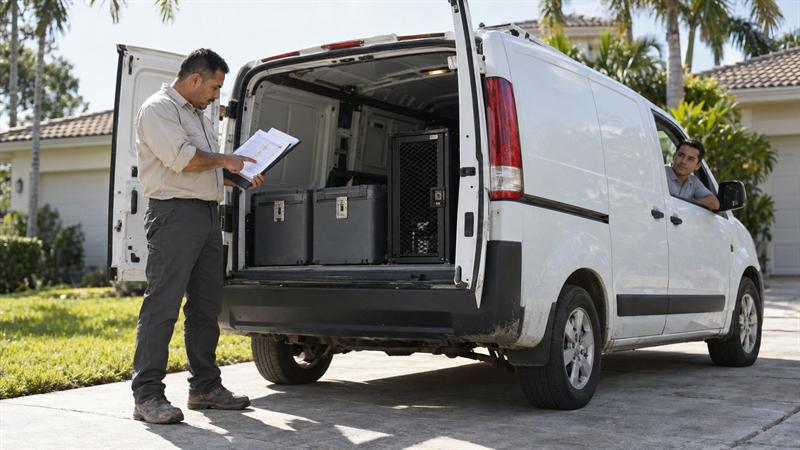
Many drivers start asking this question when a vehicle stops being just personal transportation and starts supporting work. At Mad Insurance, this often comes up when a pickup starts going to job sites every day, a vehicle is titled to a business, or an employee begins driving it for work.
The confusion is understandable because the vehicle may still feel personal. It may be the same SUV, van, or truck it has always been. What changes is the exposure, and that is where personal auto and commercial auto coverage begin to separate.
Commercial Auto vs Personal Auto Insurance at a Glance
Personal auto insurance is generally built for everyday driving such as commuting, errands, and household use. Commercial auto insurance is generally built for vehicles used to support business operations, including job-site travel, deliveries, service calls, transporting tools, or employee driving.
The simplest difference is not the vehicle itself. It is the role the vehicle plays. A standard pickup can create commercial exposure if it is being used to run a business.
The Simplest Difference Between the Two
Personal auto coverage is designed for personal transportation. Commercial auto coverage is designed for business use, business ownership, and higher work-related driving exposure.
If a vehicle is part of daily operations, the insurance conversation usually changes too. This is where problems can start for business owners who still think of the vehicle as personal because it does not look like a company truck.
Why the Wrong Policy Type Can Create Problems
The issue usually does not show up when the policy is purchased. It shows up later, after the vehicle use has changed and the policy has not. A common pattern is that a personal vehicle slowly becomes a work vehicle over time, and the coverage never gets updated to match.
That creates a mismatch between the policy and the way the vehicle is actually used. The problem often becomes more obvious after an accident, when a client asks for proof of coverage, or when a business adds drivers without reviewing the policy setup.
What Personal Auto Insurance Usually Covers
Personal auto insurance usually covers everyday driving for personal needs. That includes commuting, family errands, and routine household transportation. For a closer look at how personal coverage is structured, see auto insurance.
Some personal policies allow limited business-related driving, but that does not mean every work use fits. The real question is whether the vehicle is still being used mainly as a personal vehicle or whether it has become part of business operations.
Everyday Personal Driving and Commuting
Driving to and from work is not the same as using a vehicle to perform work. Commuting usually means traveling to a fixed workplace. Running service calls, going from job site to job site, or making deliveries is different because the vehicle is being used to support business activity.
That distinction matters because it changes the risk profile. If the vehicle is being used to earn income throughout the day, it is generally no longer operating like a typical personal-use vehicle.
Where Limited Business Use May Still Fall Short
This is where many people get caught off guard. They assume occasional work use is always fine, but that may stop being true once the use becomes regular, the vehicle carries tools or materials, or employees start driving it.
A common pattern is a personal pickup that starts with a few business errands and then becomes the truck used for every job. Once that happens, the vehicle has taken on a business role, and ignoring that can leave the coverage out of step with actual use.
What Commercial Auto Insurance Is Designed For
Commercial auto insurance is designed for vehicles that support business operations. That includes vehicles owned by the business, vehicles used regularly for work, and vehicles driven by employees or used in higher-exposure work situations.
For readers comparing actual policy options, commercial auto insurance is built around these business-use realities. The structure is meant to reflect how the vehicle is really being used, not how it was first described when coverage started.
Vehicles Used to Run or Support a Business
This includes more than delivery vans and marked company trucks. It also includes pickups going to job sites, vehicles carrying tools and materials, service vehicles used for house calls, and cars used for repeated client-facing business travel.
A vehicle does not have to look commercial to function like one. This often comes up with contractors, mobile service businesses, and growing companies that start with one mixed-use vehicle.
Higher Exposure, Higher Limits, and Broader Business Considerations
Business use creates different liability concerns because the vehicle is tied to revenue-producing activity. The more often it is used for work, the more likely it is that contracts, financing, employees, or client requirements start affecting the insurance decision.
This may connect to broader business planning as well. Businesses that rely on vehicles often need to review related coverage areas, which is why Small Business Insurance in Florida: Coverage Areas to Review by Business Function can become relevant once the vehicle is part of day-to-day operations.
When a Vehicle May Need Commercial Coverage
This is the question most readers are trying to answer. A vehicle may need commercial coverage when its ownership, drivers, or work use no longer fit the assumptions of a personal auto policy.
One sign alone does not always decide it. Several signs together usually point in the same direction.
- The vehicle is owned or titled by the business
- Employees drive it
- It carries tools, equipment, or inventory regularly
- It is used for deliveries, job sites, or client transport
- It tows trailers or supports specialized work
The Vehicle Is Owned or Titled by the Business
Ownership is one of the clearest signals. When a vehicle is titled to a business, it often means the vehicle has moved beyond personal transportation and into a business-use category.
This point gets missed frequently. People focus on how often the vehicle is driven, but title can matter just as much because it changes who owns the exposure. If the business owns the vehicle, the coverage should usually reflect that setup.
Employees Drive It
Employee driving is another major dividing line. Once employees are behind the wheel for work, the exposure can change quickly.
Even occasional employee driving means the vehicle is being used in a business context, and that often calls for a closer commercial review.
It Carries Tools, Equipment, or Inventory Regularly
A vehicle that regularly carries tools, materials, inventory, or work equipment is no longer being used like a standard personal car. It has become part of the business operation.
This is a common pattern with contractors, technicians, and mobile service providers. The vehicle may still look personal, but once it functions as a moving workspace or supply vehicle, the coverage question becomes more important.
It Is Used for Deliveries, Job Sites, or Client Transport
Regular travel tied directly to income-producing work is one of the strongest indicators that commercial coverage may be needed. Going from site to site, transporting goods, or driving clients changes the purpose of the vehicle.
This is different from commuting. Commuting gets you to work. Deliveries, service calls, and repeated job-site travel are part of the work itself, and that often means the vehicle is operating beyond personal use.
It Tows Trailers or Supports Specialized Work
Trailer use and specialized work activity can raise the exposure. That is especially true when the towing or equipment use is tied to business operations.
This is where problems can start for vehicles that were insured as personal autos years ago and never updated. Once the vehicle supports specialized work on a regular basis, the original policy setup may stop matching reality.
If you recognize these signs, the vehicle may need more than a casual policy review.
- The vehicle is in the business name
- Employees or non-household drivers use it for work
- It goes to job sites, deliveries, or service calls regularly
- It carries equipment, inventory, or tows for business purposes
When two or more of these are true, the vehicle may be functioning like a commercial asset and usually deserves a closer review.
Common Mixed-Use Scenarios That Cause Confusion
Most confusion happens in mixed-use situations. The vehicle still has personal use, but it also supports work often enough that the line is no longer clear.
This is where generic articles usually fall short. They give a broad answer without explaining how these situations develop in real life.
Sole Proprietor Using a Personal Pickup for Jobs
This is one of the most common gray areas. A sole proprietor may own the truck personally, but if it is hauling tools, visiting job sites daily, and functioning as part of the business, the personal label stops being very meaningful.
The factors that matter most are frequency, what the truck carries, and how central it is to operations. If the business depends on that vehicle to get work done, that often points away from simple personal-use treatment.
Realtor or Sales Professional Driving to Appointments
This scenario is more nuanced because the vehicle may not carry equipment or look work-related. Even so, repeated business driving creates a different exposure than ordinary commuting.
The key distinction is whether the vehicle is simply being used to get to work or whether driving itself is a routine part of generating business. That is where the evaluation starts to shift.
Family Vehicle Occasionally Used for Business Errands
Occasional business errands do not automatically turn a family vehicle into a commercial vehicle. The problem is that what starts as occasional often becomes regular without anyone noticing the shift.
A common pattern is a household vehicle that starts being used for supply runs, vendor pickups, or client-related tasks every week. Once that becomes routine, the vehicle may no longer fit a simple incidental-use pattern.
Side Gigs, Delivery Apps, and Mobile Services
Side gigs and mobile work create confusion because the vehicle may still be used personally most of the time. What changes the answer is not just the percentage of personal use. It is the fact that the vehicle is also being used for paid work in a regular, structured way.
This usually becomes more complicated as the side gig grows. More driving, more stops, more customer interaction, and more work-related use all push the vehicle further away from basic personal-use assumptions.
Personal Auto vs Commercial Auto: Key Differences
The clearest way to compare the two is by looking at the practical issues that drive policy fit. This is where the difference becomes easier to evaluate.
Ownership and Titled Interest
Personal auto policies are generally built around personal ownership and household use. Commercial auto policies are designed to account for business ownership and vehicles tied to business operations.
If the vehicle is titled in the business name, that often changes the answer quickly. Title is not a small detail. It changes who owns the risk.
Who Can Drive the Vehicle
Personal auto policies are usually centered around household or personal-use drivers. Commercial auto situations often involve employees, additional drivers, or work-related use outside a normal household setup.
If employees are driving, the issue is no longer just personal convenience. The vehicle is now part of a business activity pattern, and that often requires a different type of review.
Liability Limits and Risk Exposure
Business vehicles are exposed to different driving patterns and different consequences. More miles, more job-related travel, more equipment, and more business dependency usually lead to higher exposure.
That often means the policy needs to reflect business risk, not just private driving habits. Treating a work vehicle like a family car can leave the exposure understated.
Exclusions and Underwriting
Policies are priced and structured based on how the insurer expects the vehicle to be used. When the actual use changes, the underwriting approach changes too.
This is where misunderstandings can become expensive. People focus on whether the vehicle is insured at all, when the more important issue is whether it is insured for the way it is really being used.
Documentation and Proof Requirements
Business vehicles often bring added documentation needs. Financing, contracts, proof of coverage, and client requirements all become more relevant once the vehicle supports business operations.
This is another real-world pattern. Many people only start asking the personal vs. commercial question after someone asks for proof that the vehicle is properly insured for work use.
A Simple Checklist to Help Decide
Use this checklist before renewing, buying, or comparing coverage. If several of these apply, the vehicle likely needs a commercial review.
- Who owns or titles the vehicle?
- Who drives it?
- How often is it used for work?
- Does it carry tools, inventory, or clients?
- Is it used for deliveries, service calls, or job sites?
If you are preparing to compare business coverage, the Commercial Insurance Quote Checklist for Florida Business Owners is a useful next step because it helps organize the details that usually matter most.
Questions to Ask Before Renewing or Buying Coverage
The goal is not to guess. The goal is to match the policy to the way the vehicle is actually used now, not how it was used when the policy started.
If you are seeing business ownership, employee driving, regular equipment hauling, or job-site travel, that often means the review needs to move beyond a basic renewal conversation.
How Florida Drivers and Business Owners Can Review the Right Fit
Mixed-use vehicles are where comparison matters most. One-size-fits-all assumptions often break down when a vehicle has both personal and business use, especially as business activity grows.
At Mad Insurance, the approach is to look closely at how the vehicle is actually being used and compare options from there. That matters because the right answer is usually tied to the details: ownership, drivers, work pattern, and business role.
Why Comparing Carriers Matters for Mixed-Use Vehicles
Not every mixed-use situation is identical. A family SUV occasionally used for business errands is different from a pickup that supports field operations every day.
This is why comparing carriers matters. Policy fit depends on the specifics, and broad assumptions are often where coverage mismatches begin.
When to Review Personal, Commercial, and Related Business Policies Together
Once a vehicle becomes part of the business, the issue usually does not stop with auto coverage alone. It often connects to broader business insurance planning.
For example, businesses that rely on vehicles often end up reviewing liability, property, or workers’ compensation exposure at the same time. That is why looking at the full commercial insurance picture makes sense when the vehicle is central to operations.
Key Takeaways
- A vehicle does not need to look commercial to need commercial coverage.
- The biggest decision factors are ownership, drivers, and how the vehicle supports work.
- Employee use, business title, regular job-site travel, and hauling tools are strong indicators that the vehicle may have outgrown personal-only coverage.
- Most problems start when vehicle use changes over time but the policy never changes with it.
- If several business-use signs are present, the issue usually calls for a closer review rather than guesswork.
Conclusion
The real issue is not just choosing between two policy names. It is making sure the coverage matches what the vehicle has become. When a personal vehicle turns into a work vehicle and the policy stays the same, that can lead to coverage mismatches, documentation issues, and claim complications at the worst possible time.
If the vehicle is business-titled, driven by employees, used at job sites, or carrying equipment regularly, the practical next step is to review it with Mad Insurance and compare options that fit how it is being used today. For a direct next step, request a quote.
FAQ
Does personal auto insurance cover business use?
Sometimes, but not always. Personal auto insurance is usually built for everyday personal driving, and limited business-related use is not the same as regular work use.
The key distinction is whether the vehicle is still mainly used like a personal car or whether it has become part of day-to-day business operations. A car used to drive to an office is different from a pickup used at job sites every day or a vehicle used for repeated deliveries.
When do you need commercial auto insurance instead of personal auto insurance?
You may need commercial auto insurance when the vehicle is being used as a business asset rather than just a personal vehicle with occasional work errands. Strong signs include business title, employee drivers, regular job-site travel, deliveries, hauling tools or inventory, or towing for work.
What changes the decision is the full pattern. One factor alone may not decide it, but several together usually mean the vehicle has moved into commercial-use territory.
If a vehicle is titled in a business name, does it need commercial auto insurance?
Business title is one of the clearest reasons to review commercial coverage. Title matters because it changes who owns the exposure and who the policy needs to be built around.
This is commonly misunderstood. Many people focus only on how often the vehicle is driven, but ownership structure is just as important because it affects whether the policy matches the actual risk setup.
Can a personal pickup truck be used for work?
Yes, but the answer depends on how the truck is being used. A pickup used occasionally for light business errands is different from one that carries tools daily, goes to job sites, or supports field operations.
The important point is that vehicle type alone does not decide the answer. What matters is frequency of work use, what the truck carries, whether employees drive it, and whether the business depends on it.
Do employee drivers mean a vehicle should be on a commercial auto policy?
Employee driving is one of the strongest indicators that commercial coverage should be reviewed. Once employees are using the vehicle for work, the exposure can change quickly.
Even occasional employee use matters because the vehicle is no longer operating only within a household or personal-use setup. That often means the insurance structure needs closer attention.
What is the difference between commercial auto insurance and hired or non-owned auto coverage?
Commercial auto insurance generally applies to vehicles owned or insured for business use. Hired and non-owned auto coverage addresses certain liability exposures involving vehicles the business uses but does not own, such as rented vehicles or employee-owned vehicles used for business errands.
The difference is important because hired and non-owned auto is not a replacement for commercial auto on a company vehicle. If the business owns or regularly operates the vehicle, that usually points back to commercial auto coverage.

Recent Comments