
At Mad Insurance, this question often comes up when a business is opening a location, signing a lease, starting a project, or trying to provide proof of coverage quickly. The confusion usually starts when someone asks for liability insurance and the business assumes that requirement also covers equipment, inventory, furniture, or build-out inside the space.
That is where coverage gaps can begin. These two coverages protect different parts of a business, and the difference often does not become clear until a claim or property loss forces the issue.
General Liability vs Commercial Property Insurance at a Glance
General liability usually applies when another person claims your business caused injury or property damage. Commercial property usually applies when your business suffers physical damage to its own building, contents, equipment, inventory, or other covered property.
- General liability: usually responds to third-party bodily injury and third-party property damage claims
- Commercial property: usually responds to damage involving property your business owns, uses, or relies on
- General liability is commonly requested by: landlords, clients, vendors, and contract partners
- Commercial property is commonly overlooked when: a business rents space and assumes the landlord’s policy covers everything inside
- Many businesses need both: because third-party claims and property loss are separate exposures
If you are comparing these as part of a broader coverage review, it helps to look at them within your full commercial insurance strategy, not as interchangeable options.
The simplest way to tell them apart
Start with one question: who suffered the loss? If someone outside the business is claiming injury or damage, that usually points toward liability. If the business’s own property was damaged, stolen, or destroyed, that usually points toward property coverage.
That simple distinction can prevent expensive misunderstandings. A common mistake is focusing on the document you were asked to provide instead of the type of loss you actually need to prepare for.
What General Liability Insurance Usually Covers
General liability insurance usually covers claims involving third-party bodily injury or third-party property damage tied to business operations. That includes situations like a customer slipping on the premises, a visitor getting hurt in a common area, or business activity damaging someone else’s property.
It is also one of the most commonly requested coverages in leases, contracts, and certificates of insurance. For a closer look at the coverage itself, see general liability insurance.
- Customer injuries on your premises
- Damage your business causes to someone else’s property
- Claims tied to normal operations where another party alleges harm
- Coverage that is often needed to satisfy landlord or contract requirements
What it generally does not do is cover damage to your own inventory, equipment, office contents, or building. This is one of the biggest mix-ups in commercial coverage. It often shows up when a business carries liability because it was required, then later realizes its own property was never the focus of that policy.
Common claim situations that often fall under general liability
A visitor slips and falls in the lobby. A contractor’s work damages part of a client’s property. A customer claims they were injured while at your location. These situations usually fall on the liability side because another party is making the claim.
This becomes relevant for businesses that serve the public, work on client sites, or have vendors and deliveries moving through the property. If your operations bring in outside people or place your team in someone else’s space, liability exposure is already part of the picture.
Why businesses are often asked to show proof of liability coverage
Landlords, project owners, clients, and municipalities usually ask for general liability because they want proof that a business has coverage for claims that could affect them. That is why certificates often come up early, sometimes before work begins or before a tenant takes possession of a space.
If that part of the process feels unclear, Certificate of Insurance Explained: What Certificate Holders Usually Request helps explain what third parties are typically asking for and why. This is where many businesses stop too soon: they satisfy the certificate request and assume the full risk review is done.
What Commercial Property Insurance Usually Covers
Commercial property insurance usually covers physical damage to covered business property. That may include an owned building, business personal property, furniture, electronics, tools, stock, equipment, fixtures, and other assets the business uses to operate.
For a closer look at that coverage, see commercial property insurance. In this comparison, the key point is simple: property coverage focuses on the business’s own physical loss, not a claim from someone else.
- Owned buildings, when building coverage applies
- Inventory and stock
- Office furniture and electronics
- Tools, equipment, and fixtures
- Property exposures inside leased spaces
Many businesses first see the difference when they think through what would happen after a fire, theft, vandalism, or major water loss. If the damaged items belong to the business, that usually points toward commercial property, not general liability.
What counts as business personal property
Business personal property usually includes items such as computers, desks, shelving, point-of-sale systems, inventory, furniture, equipment, and tools. These are the assets that keep the business functioning day to day, and they are often concentrated inside a rented office, retail suite, warehouse, or worksite.
A common oversight is thinking first about the building and forgetting the value sitting inside it. For many tenants, the contents are a major exposure. Replacing stock, technology, or specialized equipment can create unexpected costs and disrupt normal operations.
What leased businesses often overlook
The landlord’s policy usually protects the landlord’s interest in the building, not everything the tenant brought into the space. This is where leased businesses can get caught off guard. Inventory, office contents, tools, signage, and improvements made to the unit usually need to be evaluated from the tenant’s side.
Liability proof does not replace property protection. A business can fully satisfy a lease requirement for general liability and still be exposed if a covered cause of loss damages its own contents. That misunderstanding becomes more serious when the tenant spent money improving the space and assumed those upgrades were covered somewhere else.
Side-by-Side Examples: Which Policy Usually Responds?
This is the clearest way to compare the two coverages. When the event is tied to another party’s injury or damage claim, it usually falls on the liability side. When the event damages the business’s own property, it usually falls on the property side.
A customer slips in the lobby
This usually points toward general liability because a third party is alleging injury. The location matters less than who was harmed. Once an outside person makes the claim, the issue usually becomes a liability matter rather than a property one.
A fire damages office contents or inventory
This usually points toward commercial property because the loss involves the business’s own physical assets. If desks, computers, shelving, stock, or fixtures are damaged, the claim is generally tied to property coverage rather than liability.
A business operation damages a client’s property
This usually points toward general liability if the damage involves someone else’s property. A common example is work being performed at a client location where business activity leads to accidental damage. The claim develops as a third-party property damage issue, not a loss to the business’s own property.
A storm damages the building, tools, or equipment
This usually points toward commercial property, subject to policy terms and deductibles. The key distinction is that the damage affects property the business owns, uses, or depends on to operate. If that distinction is missed, a business can discover too late that it insured its liability exposure but not the property exposure that supports day-to-day operations.
The landlord has insurance, but the tenant still has a loss
This is one of the most misunderstood situations in commercial insurance. The landlord may have coverage on the building, but that does not mean the tenant’s contents, stock, electronics, or improvements are included. A tenant can satisfy the landlord’s requirements and still face a property loss on its own side.
If any of these situations sound familiar, the coverage review may need to go further.
- You were asked for general liability and assumed that covered the rest
- You lease space and have inventory, furniture, equipment, or build-out inside it
- You need to provide a COI quickly but have not reviewed what property values should be insured
- You are opening, renovating, or starting a new project and the insurance pieces do not seem to line up
When these signs show up together, the business often needs a more complete review before a lease, project, or claim exposes the gap.
Do You Need General Liability, Commercial Property, or Both?
For many businesses, the practical answer is both. If your business deals with customers, visitors, vendors, client sites, or contracts, liability exposure is already part of the picture. If your business also owns or relies on physical property to operate, property exposure is already there too.
The better question is not which one is better. The better question is which losses would hurt the business first and whether both sides of that risk have been addressed.
Businesses that may focus first on liability requirements
Contractors, consultants visiting client locations, vendors, and businesses entering service agreements usually encounter liability requirements first. That is because other parties want proof the business carries coverage for claims that could affect them.
This usually leads to COI requests, contract review, and pressure to produce documents quickly. The problem is that fast document requests tend to narrow attention to liability only, even when the business also has important property exposure.
Businesses that may also need property protection even if they lease space
Retail stores, offices, salons, restaurants, medical offices, service businesses with equipment, and contractors storing tools or materials usually have meaningful property exposure even when they do not own the building. The lease does not remove the value sitting inside the space.
This is something many businesses discover after investing in setup costs without fully reviewing how those assets would be covered after a loss. If you are looking at a long list of items that would be expensive or disruptive to replace, that usually means property coverage needs close attention.
When a Business Owners Policy may come up
For some eligible small businesses, a Business Owners Policy may combine liability and property coverage in one package. That can be a practical structure when the business fits the underwriting profile and the package aligns with the actual exposure.
What matters most is not the package name. What matters is whether the policy structure reflects the business’s operations, property values, and risk points. Packaging may help with simplicity, but it does not remove the need to review what is included and where the limits sit.
Common Misunderstandings That Can Create Coverage Gaps
Most coverage problems in this area do not start with a claim. They start with a bad assumption. Once that assumption gets carried into a lease, project, or renewal, the gap can stay hidden until the business needs to use the policy.
- “The landlord’s policy covers everything.” It usually does not cover the tenant’s own business property.
- “General liability covers my own property.” It usually does not. Liability is typically about claims from others.
- “If the lease or contract only asks for liability, that is all I need.” That only answers the third party’s concern, not the full risk to the business.
This is where problems can grow over time. Businesses add equipment, furniture, stock, tenant improvements, and project materials, but the original insurance conversation never moves past the first certificate request.
Required coverage is not always the same as sufficient coverage
Third parties usually ask for the coverage that protects their interest. A landlord wants to see liability because a claim tied to your operations can affect the property owner. A client wants to see liability because your work could create exposure for them. That does not mean they are reviewing whether your business could recover from damage to its own property.
This distinction matters because a requirement can be met while the business remains underinsured where it hurts most. If you are only buying what someone else asked to see, the decision is being driven by their risk, not yours.
What to Review Before Requesting Quotes
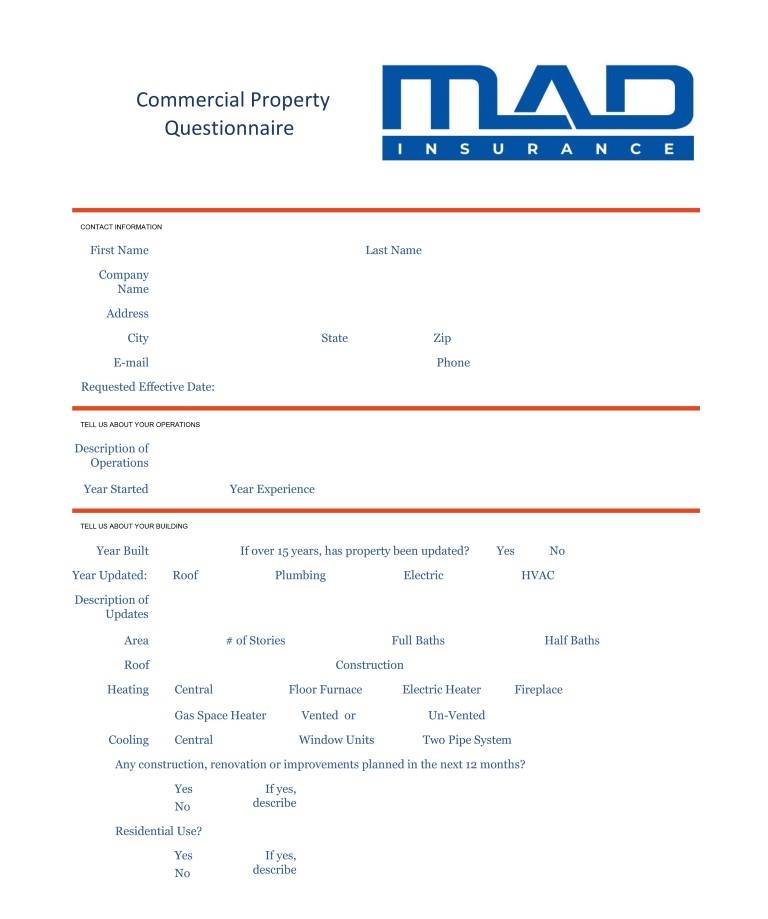
Before requesting quotes, the business should be clear on what property exists, what operations create liability exposure, and what documents or contract requirements are already in play. That preparation usually leads to better comparisons and fewer surprises.
- Business location and occupancy
- Whether the space is owned or leased
- Estimated value of inventory, furnishings, electronics, tools, and equipment
- Tenant improvements or build-out inside the space
- Operations that create third-party injury or property damage exposure
- Lease, COI, lender, or contract requirements
If the property side needs organizing, Commercial Property Insurance Quote Checklist: What to Prepare Before Requesting Coverage is a useful starting point. For a broader review across commercial lines, Commercial Insurance Quote Checklist for Florida Business Owners helps map what information should be ready before comparing options.
Information that helps compare coverage accurately
Property values, building details, occupancy, business contents, operations, and documentation requirements all shape the comparison. This is another place where businesses lose time. They shop before the exposure picture is clear, then end up comparing incomplete quotes that do not solve the same problem.
At Mad Insurance, the more useful process is to identify what needs to be protected first, then compare carrier options around that. This usually leads to cleaner decisions because the quote is being measured against the actual exposure, not just the fastest price or the narrowest requirement.
Key Takeaways
- General liability usually addresses third-party injury or third-party property damage claims.
- Commercial property usually addresses physical loss to property your business owns, uses, or relies on.
- Leasing a space does not remove property exposure inside that space.
- The coverage a landlord or client asks to see is not always the same as the coverage your business needs most.
- Many businesses need both because liability claims and property losses affect different parts of the operation.
Conclusion
The real problem is not just understanding the definition of general liability vs commercial property insurance. The real problem is buying one policy to satisfy a requirement and assuming it solves both sides of the risk. That can leave a gap that stays hidden until property is damaged, operations are disrupted, or a claim shows the business insured the wrong exposure.
At Mad Insurance, this is where a clear comparison helps. Businesses that lease space, store inventory, rely on equipment, welcome customers, or work under contracts usually need the liability side and the property side reviewed together. If that review is delayed, the business may end up reacting after a loss or during a deadline-driven scramble for documents.
Mad Insurance is a practical next step when the goal is to compare these coverages clearly and match them to the way the business actually operates. Start with the commercial insurance quote checklist for Florida business owners so the comparison is based on real exposures, not assumptions.
How Mad Insurance Approaches This Comparison
Mad Insurance approaches this comparison by starting with the business situation, not just the policy name. A common pattern is that the first insurance conversation happens because someone else needs proof of coverage fast. That creates pressure to solve the document problem first, even when the real issue is broader.
The better approach is to separate third-party exposure from property exposure, then compare options across carriers based on what the business actually needs to protect. This matters most when the business leases space, has build-out inside the unit, stores tools or inventory, or needs certificates for landlords and contracts at the same time.
That is why this comparison matters. When coverage is structured around the wrong assumption, the policy can look fine until the loss hits the side of the business that was never reviewed closely enough.
FAQ
Does general liability insurance cover damage to my own building or equipment?
Usually no. General liability is generally designed for third-party claims, such as when someone says your business caused injury or damaged their property. Your own building, inventory, tools, office contents, and equipment are usually part of the commercial property discussion instead.
A simple example makes the difference clear. If a customer slips in your lobby, that usually points toward liability because another party is making the claim. If a fire damages your computers, shelving, or stock, that usually points toward commercial property because the damaged items belong to the business.
If I rent my business space, do I still need commercial property insurance?
In many cases, yes. Renting the space does not remove the business’s property exposure. The business may still own inventory, tools, furniture, electronics, signage, or improvements inside the unit that would be expensive to replace.
This is one of the most common misunderstandings in leased spaces. The landlord may insure the building structure, but the tenant usually still needs to think about what is inside the space and what would happen if those items were stolen, damaged, or destroyed.
Why would a landlord ask for general liability but not commercial property insurance?
Because the landlord is usually focused on the landlord’s own exposure first. Liability coverage is often requested so there is protection in place if the tenant’s operations lead to injury or damage that affects others or affects the premises.
That request does not mean the landlord is reviewing the tenant’s inventory, office equipment, or build-out. This is what commonly gets misunderstood: required coverage reflects the third party’s concern, while sufficient coverage should reflect the business’s actual risk too.
Can a small business carry both general liability and commercial property insurance in one policy?
Sometimes. Some small businesses may be eligible for a Business Owners Policy that combines liability and property coverage in one package. That structure can be practical when the operations, occupancy, and property exposure fit the policy type.
The important distinction is that packaging does not automatically mean every exposure is covered the right way. Limits, valuation, covered property categories, and business operations still matter. The package can simplify placement, but the underlying exposure still has to be matched correctly.
Which policy usually applies if a customer gets hurt at my business?
That usually points toward general liability because the issue involves an alleged injury to a third party. A slip and fall in a lobby, showroom, or customer area is a common example.
The useful distinction is that the event happening on your property does not automatically make it a property claim. What matters most is who was harmed. If the claim comes from a customer, vendor, or visitor, that usually places it on the liability side of the comparison.
Which policy usually applies if fire, theft, or vandalism damages my business property?
That usually points toward commercial property insurance because the loss involves physical damage to property the business owns, uses, or depends on. This can include stock, electronics, fixtures, tools, or office contents.
The key factor is that the business itself suffered the property loss. That is different from a third-party claim. If the event damages your own operational assets, the property side is usually what determines whether the business can recover those items and keep operating.
Recent Comments