
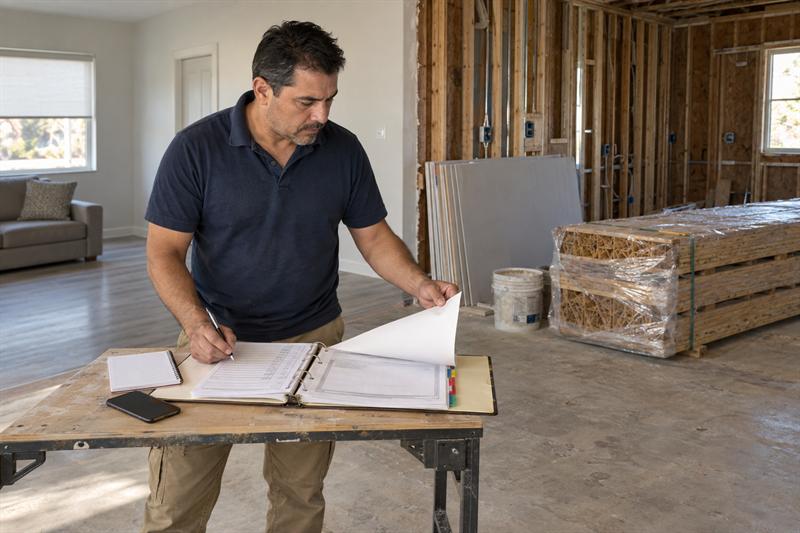
Builders risk usually becomes a priority when a project is already gaining momentum. A lender may ask for proof of coverage, a contract may reference course of construction insurance, or materials may be scheduled for delivery. At Mad Insurance, this is a common point of confusion because the project is active, deadlines are approaching, and the insurance side has not been fully sorted out.
What Is Builders Risk Insurance?
Builders risk insurance is property-focused coverage for a building or structure during construction, renovation, or major improvement. It is often called course of construction insurance because it applies while the work is in progress and the property is not yet in its finished state.
The key distinction is straightforward. Builders risk generally addresses damage involving the project itself, while liability policies address claims involving injury or damage to other people or property. That is why builders risk should not be treated as a catch-all policy for a job site.
A common pattern is that builders risk comes up late, after financing or contract requirements are already in place. At that point, the question is no longer just what the policy is. The real issue is how to get the project covered without slowing down the next step.
Who May Need Builders Risk Insurance in Florida?
Property owners, developers, and investors
Property owners, developers, and investors may need builders risk when they have a financial interest in the work being completed. That can include new construction, major additions, and renovation projects where the structure is changing during the build.
If the owner is funding the project directly or through financing, builders risk often becomes part of the larger documentation process. This is where problems usually start for owners who assume the contractor’s insurance covers every part of the job. In many cases, it does not.
General contractors and remodelers
General contractors and remodelers may also be the party securing builders risk coverage, depending on how the contract is set up. The right structure depends on who owns the project, who is responsible for work in progress, and which parties need to be reflected in the policy.
This usually gets more complex on renovation work. A remodel involving an existing building, partial occupancy, or phased construction creates more questions than a ground-up project on a clear site.
Projects tied to lender or contract requirements
Many readers start researching builders risk because a lender, owner agreement, or certificate request brought it up. In those cases, the policy is not just an insurance detail. It becomes part of project readiness.
If financing or contract performance depends on proof of coverage, delays can affect more than the insurance file. They can slow funding, hold up approvals, or create friction between the parties involved. For related documentation issues, certificate holders usually request specific insurance details for a reason.
For project-specific options, Mad Insurance offers builders risk coverage information and quote support for Florida projects that need coverage aligned with actual construction details.
What Builders Risk Insurance Commonly Covers
The structure under construction
Builders risk commonly covers the structure while work is in progress. That can include a new building, an addition, or a major renovation, depending on the project and policy terms.
The purpose is to address the property value being created or changed during construction. When damage happens mid-project, the issue is not limited to the cost of materials. It can also affect labor already invested, sequencing, and the overall timeline.
Materials, supplies, and certain temporary items
Coverage commonly extends to building materials and supplies connected to the project, though the exact treatment depends on where those materials are and how the policy is written. Some policies may also address certain temporary structures or job-related items tied to the site.
This is an area where assumptions create problems quickly. Many people hear that materials are covered and stop there. In practice, location, storage conditions, and the project setup usually matter.
Optional coverage extensions that may be available
Some builders risk policies include or offer options for items such as debris removal, cleanup, and certain delay-related or soft-cost exposures. These details matter most on projects where timing and coordination already carry financial pressure.
This often comes up on larger or more involved jobs. The conversation starts with the structure itself, but the strain after a loss may come from the extra project costs and scheduling disruption that follow.
What Builders Risk Insurance May Not Cover
Liability claims
Builders risk is not the same as general liability insurance. If a third party alleges injury or property damage caused by business operations, that is a different category of exposure.
This confusion is common and can lead to the wrong expectation at the wrong time. If you want a practical breakdown of that distinction, this guide on general liability vs commercial property insurance helps explain how different policies usually respond.
Employee injuries
Builders risk does not replace workers’ compensation coverage. If employees are injured on the job, that is a separate exposure with separate insurance requirements and claim handling considerations.
If this gets overlooked, the issue does not stay theoretical. It can create compliance concerns, claim complications, and direct financial pressure on the business. Mad Insurance also helps Florida businesses review workers’ compensation coverage when job site operations involve employees.
Business vehicles and mobile operations
Builders risk also does not replace commercial auto coverage for vehicles used in business. A truck hauling tools, materials, or crew to a project is not handled the same way as the structure under construction.
This is frequently misunderstood by contractors using personal vehicles in commercial activity. If vehicle use is part of the operation, commercial auto vs personal auto insurance becomes an important distinction.
Why exclusions and limits need careful review
The broader point is that builders risk addresses one part of a construction risk problem. It does not solve every exposure on the job. Exclusions, sublimits, named insured structure, and endorsements all shape what the policy is actually doing.
If financing, subcontractors, vehicles, employees, or occupied renovation space are all part of the project, that usually means the insurance review needs to go beyond a single policy.
If any of these signs sound familiar, the project may need closer review:
- A lender or contract is asking for coverage details before work begins
- The project involves renovation of an occupied or partially occupied building
- There is confusion about whether the owner or contractor should carry the policy
- Someone assumes general liability or commercial property already solves the issue
When those indicators show up together, the project usually benefits from a coordinated insurance review before the next deadline adds more pressure.
What Information Is Commonly Reviewed on a Builders Risk Application
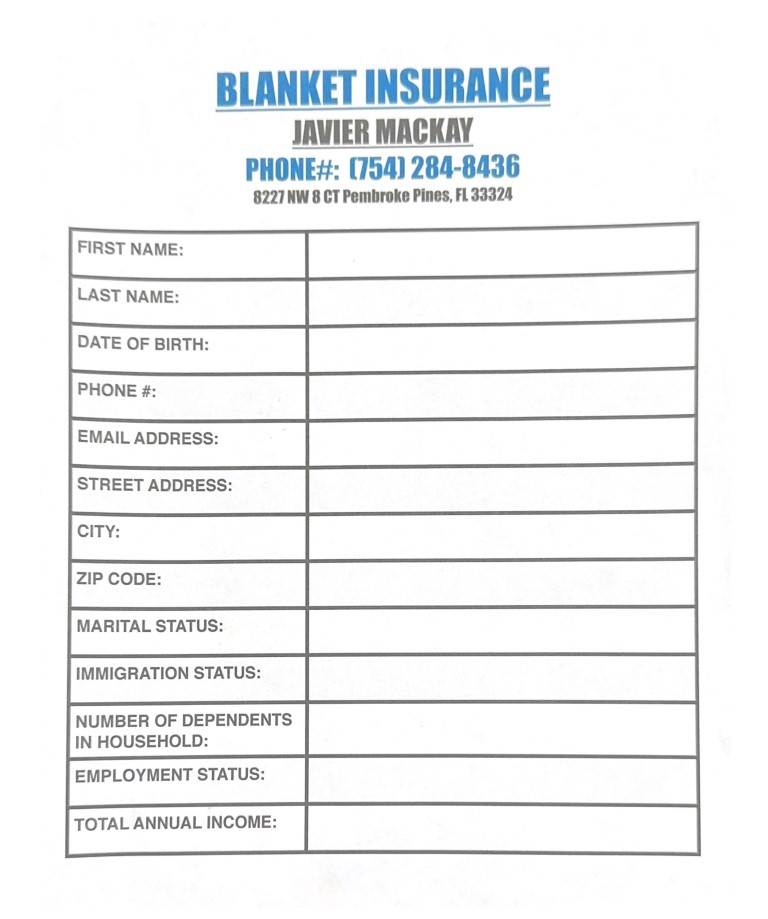
Project address, scope, and estimated completed value
Insurers commonly review the project address, the type of work being done, and the estimated completed value. That information helps frame the size of the exposure and the nature of the project.
This is where incomplete submissions can slow the process. If the scope is vague or the completed value is unclear, the review may stall because the carrier does not yet have a workable picture of what is being insured.
Construction type, timeline, and occupancy details
Construction type, expected start date, projected completion date, and occupancy status are also common review points. For renovations, whether the building is vacant, partially occupied, or still in use usually changes the conversation.
A common pattern is that a project gets described as “just a remodel” when the actual exposure is more involved. Once occupancy, staging, and existing conditions are part of the picture, the underwriting questions become more detailed.
Security, site protection, and prior loss history
Security measures and site protection matter because they help show how the project is being managed during construction. Materials on site, theft concerns, and general protective controls all affect the review.
This is not just administrative detail. It is part of how the insurer evaluates whether the project has been planned through operationally, not only financially.
Renovation details that may affect underwriting review
Renovation work usually draws closer attention than many people expect. Existing structures, partial use, phased work, and higher-value materials tend to create more detailed questions than a new build on an empty site.
This is something Mad Insurance often sees with Florida projects that are already in motion. The team assumes the hardest part is the construction itself, but the real friction may begin when the information submitted for insurance does not match the actual job conditions.
For readers preparing documentation, the process is similar to a broader property submission. A strong example is this commercial property insurance quote checklist, which shows how preparation affects the quality of the review.
How Builders Risk Fits With Other Commercial Insurance Coverage
Builders risk vs general liability
Builders risk addresses damage to the project or covered property during construction. General liability addresses third-party claims for bodily injury or property damage arising from business operations.
If the issue is damage to the project itself, that points toward a builders risk question. If someone outside the project claims harm caused by operations, that usually points toward general liability.
Builders risk vs workers’ compensation
Workers’ compensation addresses employee injury exposure. Builders risk does not.
This matters because construction businesses regularly carry both exposures at the same time. A project can involve property under construction and employee injury risk on the same day, but those exposures are not handled by the same policy.
Builders risk vs commercial auto
Commercial auto addresses vehicle-related business exposures. Builders risk addresses the structure and related covered property during the build.
If vehicles are part of the project operation, separating those risks correctly matters. Misclassifying vehicle use is one of the fastest ways for a business to think coverage is in place when the policy setup does not match the exposure.
Why construction businesses often need more than one policy
Most construction-related projects involve more than one category of risk. Property under construction, third-party liability, employee injuries, and business vehicle use are separate issues that usually need separate coverage solutions.
That is why builders risk should be viewed as one piece of a broader commercial insurance strategy. Mad Insurance helps businesses compare options across commercial insurance coverage areas so the project is not being reviewed in isolation.
Florida-Specific Considerations for Construction Projects
Weather, water, and wind exposure
Florida projects often receive closer attention because weather, water, and wind exposure affect construction risk in practical ways. This becomes more important when timing, open structures, stored materials, or unfinished work increase vulnerability.
If a project timeline stretches or the build stays exposed during active phases, the pressure on the coverage discussion usually increases. This is where a generic insurance conversation stops being useful.
Coastal or higher-exposure project locations
Location matters because some projects present more exposure than others before the structure is complete. A Florida project is reviewed not only by what is being built, but also by where it is being built and how that affects the risk while work is underway.
This usually means more attention to project details. The more exposed the location or structure, the less helpful vague application answers become.
Timing, financing, and project delays
Timing has a direct effect on insurance pressure. When financing, permits, scheduling, and material delivery are all moving together, unresolved insurance questions start turning into operational problems instead of simple paperwork problems.
If ignored, this can lead to avoidable delays. The project rarely becomes easier to place cleanly once deadlines are already in front of everyone.
When to Start the Builders Risk Insurance Process
Before financing, permit milestones, or construction start
The practical answer is early. Builders risk should be reviewed before funding requirements, certificate requests, permit milestones, or construction start dates create urgency.
That gives the project time to sort out scope, value, named insured structure, and related commercial coverage issues before they begin interfering with the schedule.
Why waiting too long can create avoidable friction
Waiting usually turns an insurance review into a project problem. Once deadlines are active, missing details are no longer minor gaps. They become reasons the process slows down.
This is something Mad Insurance often sees with fast-moving projects. The request for coverage comes in at the last minute, but the questions being asked still require a full project-level review. That mismatch is what creates friction.
Key Takeaways
- Builders risk insurance is designed for property under construction, renovation, or major improvement.
- It does not replace general liability, workers’ compensation, or commercial auto coverage.
- Project details such as scope, completed value, occupancy, and timing usually drive the review process.
- Renovation and partially occupied projects tend to create more underwriting questions.
- Waiting too long usually turns a coverage decision into a scheduling problem.
Next Steps for Florida Project Owners and Contractors
If a Florida project is already moving, the next step is to gather the details that shape the builders risk review. That usually means the project address, scope of work, estimated completed value, timeline, occupancy status, and the parties with a financial interest in the job.
At that point, the issue is not just whether builders risk is needed. The issue is whether the project is being presented clearly enough for the coverage structure to be reviewed without unnecessary delays.
Conclusion
The real problem with builders risk insurance is usually not the definition. It is the gap between how the project is actually structured and how the insurance is being handled. When that gap is ignored, funding can be delayed, documentation can become messy, and coverage decisions may end up being made under pressure instead of with clarity.
Mad Insurance is a practical next step for Florida owners, developers, and contractors who need builders risk reviewed in the context of the full project. That matters because this issue rarely stays limited to one policy. It often connects to liability, workers’ compensation, commercial auto, and certificate requirements at the same time. If the project is moving, now is a good time to review builders risk coverage and application details with Mad Insurance before those gaps create more delays.
Company Approach
Mad Insurance approaches builders risk the way Florida projects usually unfold. The goal is not just to identify a policy name. It is to understand what is being built, who needs to be protected, what deadlines are already in play, and how builders risk fits with the rest of the commercial insurance picture.
That approach matters because a common pattern is that people come in thinking they need one coverage decision, when the real issue is coordination between multiple exposures. When builders risk, liability, vehicle use, and certificate requests are all tied to the same job, clear guidance early can help prevent larger problems later.
FAQ
Is builders risk insurance required in Florida?
Not across every project. Builders risk is usually required because of a lender, contract, or project-specific obligation rather than a one-size-fits-all statewide rule.
That distinction matters. A lender-funded project commonly treats builders risk as part of the conditions for moving forward, while a smaller owner-funded job may not have the same outside requirement. The key point is that “required” usually depends on the structure of the project, not just the fact that construction is happening.
Does builders risk insurance cover renovations and remodeling?
Yes, many renovation and remodeling projects are reviewed for builders risk coverage, but they usually raise more questions than new construction. One of the biggest issues is whether the building is vacant, partially occupied, or still in active use during the work.
That changes the risk. A simple interior update in an empty space is very different from a major rehab in a building where parts of the property remain occupied. What matters most is the actual project setup, not just the label “remodel.”
Who should be listed on a builders risk policy?
The parties listed should match who has a real financial interest in the project. That can include an owner, developer, contractor, or other project party depending on how the work and financing are structured.
This is commonly misunderstood because people assume the contractor is always the only logical choice. In practice, the right policy structure depends on ownership, contractual responsibility, and who needs to be reflected because money, work, or insurable interest is tied to the job. Buying the policy is only part of the issue, and structuring it correctly is just as important.
How is builders risk different from general liability insurance?
Builders risk is focused on the project property itself during construction. General liability is focused on third-party claims for injury or property damage arising from operations.
A simple example makes the distinction easier. If part of the work in progress is damaged, that points toward a builders risk issue. If a third party claims they were harmed because of job site operations, that points toward general liability. The misunderstanding usually happens when people expect one policy to do both jobs.
What details do insurers usually ask for on a builders risk application?
They usually ask for the project address, type of work, estimated completed value, construction type, start and completion timeline, occupancy status, and the parties who need to be reflected in the coverage. Renovation projects usually draw even more detailed questions.
The reason is straightforward. Those details show what is being built, how the project is being managed, and what kind of exposure exists while the work is underway. A renovation in an occupied building creates a very different review than a new structure on an empty site.
When should builders risk insurance be arranged?
It should be addressed before financing requirements, permit milestones, or construction start dates put pressure on the process. Once those deadlines are active, missing details usually slow everything down.
This is where problems typically develop. The project team waits until the coverage request becomes urgent, but the insurance review still requires the same core information it would have needed earlier. That is why late timing usually turns a manageable insurance task into a project coordination issue.

Recent Comments