
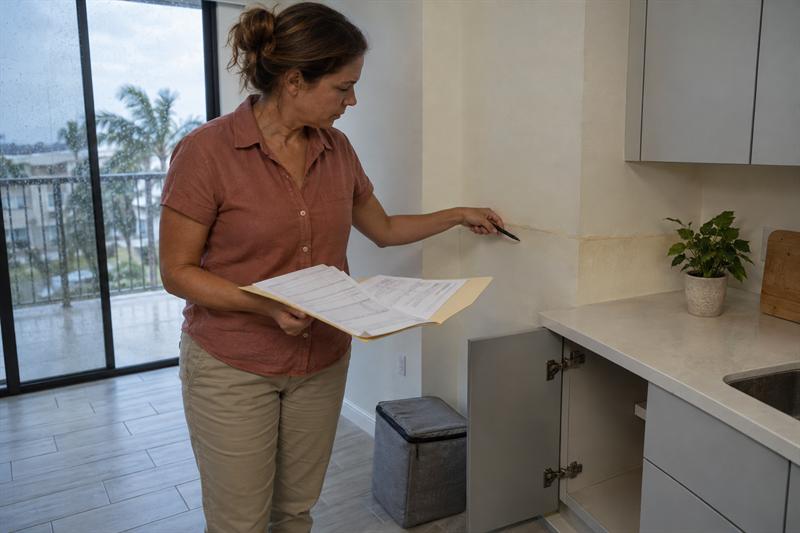
At Mad Insurance, this is one of the most common flood questions that comes up with condos, rental units, and association properties in Florida. Someone is told the building has coverage, but that still leaves the key question unanswered: what part of the flood risk is actually yours?
If that is not sorted out early, coverage gaps can affect the association, the unit owner, or the person living in the unit. The confusion usually starts when one policy is assumed to cover more than it actually does.
Why flood insurance works differently for condos and rentals in Florida
Flood insurance works differently for condos and rentals because responsibility is often split across more than one party. A single-family home usually has one owner and one policy structure. A condo or rental unit often does not.
Standard homeowners, condo, or renters policies do not typically cover flood damage the way people expect. That is why a unit can sit inside a building with insurance in place and still leave important exposure around interior features or personal belongings.
- The association may insure part of the building
- The unit owner may still be responsible for the inside of the unit
- The tenant may still be responsible for personal belongings
That split is where confusion starts. People hear “the building is covered” and assume the whole issue has already been handled.
For a broader overview of how flood fits into property protection in Florida, see flood insurance in Florida.
Why standard property coverage often leaves a flood gap
Flood is commonly handled separately from other property losses. That means a homeowner, condo owner, or renter can feel protected until the loss involves flood-related damage, which is when the gap becomes obvious.
This gets harder when someone relies on a standard home-related policy without checking how flood is treated. A helpful companion resource is Florida home insurance explained: homeowners, condo, renters, and landlord coverage, especially for understanding how property coverage changes by living situation.
Why condo ownership creates shared insurance responsibilities
Condo ownership creates layers of responsibility. One layer is the shared building structure. Another is the inside of the unit. Another is the personal property inside the unit.
During quotes and coverage reviews, a common issue is that someone knows the association insures the building but does not know whether that stops at shared areas, includes attached features, or leaves the unit owner responsible for flooring, cabinets, appliances, and interior finishes. Once that boundary is unclear, the coverage decision usually gets messy fast.
Who is responsible for flood coverage in a Florida condo?
The answer is usually split between the condo association, the unit owner, and the tenant. The exact line depends on ownership, occupancy, and the documents that define what the association insures and what the unit owner is expected to carry.
A common pattern is that each party assumes someone else is handling the missing piece. The gap often becomes clear only when a lender asks about flood coverage, a closing review raises questions, a renewal brings it back up, or a loss happens.
What the condo association may insure
The association may insure shared building property or building-level interests. That can include common areas or parts of the structure that fall under the association’s responsibility.
Where people get into trouble is assuming that means the entire unit is covered from top to bottom. It usually is not that simple. The policy protecting the building is not automatically the policy protecting interior finishes or personal belongings.
- Shared building areas may fall under association responsibility
- Building-level flood coverage does not automatically answer unit-level questions
- Association documents usually define where their responsibility stops
What the unit owner may still need to insure
The unit owner may still need protection for interior finishes, flooring, cabinets, appliances, improvements, and personal property. This is one of the biggest blind spots in Florida condo flood planning.
This comes up often with upgraded units. The building has a policy, but the owner has put money into new floors, custom cabinets, or interior improvements and assumes that work is part of the building coverage. That assumption can lead to expensive surprises.
If you are the unit owner and you have upgraded the inside of the condo, your flood exposure may be larger than you think. Overlooking that can leave the most valuable part of your unit underprotected.
What a tenant is usually responsible for
A tenant is usually responsible for personal belongings inside the unit. That means furniture, clothing, electronics, and other portable property are a separate issue from the building itself.
A common misunderstanding is that if the landlord has insurance, the tenant’s property is protected too. That is usually not how the coverage works. If a flood damages the tenant’s belongings, the building policy does not solve that problem.
Readers comparing unit, renters, and broader home-related protections can also review personal insurance options for context on how these coverages fit together.
Building coverage vs contents coverage: what is the difference?
Building coverage and contents coverage are not the same thing. One generally relates to physical parts of the property itself. The other generally relates to the belongings inside it.
This distinction matters most in condos because the line between the two is where unit owners often make the wrong assumption. If that line is not clear, the policy can look complete while still leaving important items out.
Examples of building-related flood damage
Building-related damage generally refers to parts of the structure or attached property, depending on how the policy is written.
- Structural components
- Attached systems
- Built-in fixtures
- Property treated as part of the unit or building rather than portable belongings
The key issue is not the label alone. The key issue is where the policy draws the line.
Examples of contents-related flood damage
Contents generally means personal belongings inside the unit. These are the items people live with and move around.
- Furniture
- Electronics
- Clothing
- Portable personal property
This often becomes a problem for renters first, but owners miss it too. If the items are inside the condo but not treated as part of the structure, they usually need to be considered separately.
Where improvements and betterments fit in
Improvements and betterments are where condo flood decisions can become more expensive. These are the upgrades or changes inside the unit that go beyond the original condition of the space.
This is where costs can climb quickly. A unit owner installs better flooring, updated cabinets, or upgraded interior finishes and assumes the building policy keeps up with those changes. It often does not. If the interior has been improved, the flood review should reflect that.
Common Florida condo and rental flood scenarios
The same building can create very different flood insurance needs depending on who owns the unit and who lives there. That is why generic flood advice often falls short for condos and rentals.
A common pattern is that people search by property type when the better question is ownership plus occupancy. Starting there usually makes the coverage decision much clearer.
Owner-occupied condo unit
An owner-occupied unit usually needs the clearest review of interior responsibility and personal property exposure. The owner is often the one most likely to assume the association’s coverage extends farther than it does.
- Interior finishes need attention
- Personal belongings are still a separate issue
- Any upgrades inside the unit raise the stakes
If you own and live in the condo, the main risk is assuming the building policy follows the unit all the way inside. That can create a significant coverage gap.
Condo owner renting the unit to a tenant
A landlord has a different problem. The landlord’s interest is tied to the unit itself, while the tenant’s interest is tied to personal belongings inside it.
This is where confusion often multiplies. The owner may think the tenant’s renters policy handles everything inside. The tenant may assume the owner’s policy covers the unit and belongings. That split can leave each side underestimating a different part of the loss.
Tenant renting a condo unit
A tenant in a condo usually needs to think first about belongings. The landlord or association may have protection tied to the building, but that does not automatically extend to the tenant’s property.
If you are renting and your main concern is furniture, electronics, clothing, and daily-use items, that is a separate exposure. Ignoring it can mean paying to replace those items out of pocket after a flood loss.
Unit in a building with an association flood policy already in place
This is the scenario that causes the most confusion. Everyone hears that the building already has flood insurance, which can make the issue sound settled.
It is not settled until the coverage boundary is clear. That usually means identifying what the association insures, what the unit owner still carries, and whether contents inside the unit are addressed at all. If those lines are not confirmed, the policy setup can look stronger than it really is.
How to review whether your current flood protection is enough
The fastest way to spot a problem is to review the documents that define responsibility. Guessing often leads to duplicate coverage in one area and a missing layer in another.
If you are reviewing your policy before a quote, renewal, or purchase, gather the same kind of details you would use for a broader property insurance review. This guide on what information to have ready for a homeowners insurance quote is a useful starting point for organizing documents.
Documents to request and review
- Association insurance summary or certificate
- Bylaws or governing documents that define unit boundaries
- Current declarations page
- Lender requirements, if they apply
- Lease details if the unit is rented out
These documents often make the difference between a clear quote and a confusing one. If they do not show who is responsible for interior elements and contents, the next step usually requires a closer coverage review.
Questions to ask before buying or renewing coverage
- What exactly does the association insure?
- What part of the interior unit is the owner’s responsibility?
- Are contents handled separately?
- Does rental occupancy change the quote or coverage approach?
- Does it make sense to compare more than one flood policy option?
If those questions do not have clear answers, the policy is not fully understood yet. That usually means the setup needs another look before a loss exposes the gap.
If any of these sound familiar, the coverage probably needs a closer review:
- You were told the building has flood coverage, but no one explained what that means for your unit
- You own a condo with upgraded flooring, cabinets, or appliances
- You rent out the unit and are not sure where your responsibility ends and the tenant’s begins
- Your lender, association, or renewal paperwork raised a flood question you cannot answer quickly
When one or more of those signs show up, the next step is usually a direct comparison of the current setup against the actual unit responsibility.
NFIP vs private flood insurance for Florida condos and rentals
For many Florida condo owners and renters, the practical move is to compare both. The goal is not just to find a flood policy. The goal is to match the policy structure to the way the condo is owned, occupied, and insured.
At Mad Insurance, that comparison matters because condo and rental flood questions are rarely solved by a one-size-fits-all answer. The more layered the property setup is, the more important the comparison becomes.
When an NFIP option may fit
An NFIP option may fit when the goal is a recognized baseline flood solution and the property setup is relatively straightforward. For some owners, that creates a clear starting point.
The key is making sure the policy lines up with what the owner is actually responsible for. If the ownership structure is simple, that path may make sense. If the exposure is layered, the review usually needs to go further.
When private flood insurance may be worth comparing
Private flood insurance is often worth comparing when the property type, occupancy setup, or coverage needs are more specific. This usually applies when the issue is not just flood exposure, but how the building, unit, and contents responsibilities are divided.
A common pattern is that condo owners start with a general flood question and end up needing a more tailored comparison because of upgrades, rental use, or uncertainty around association coverage. That is where comparison becomes practical, not just optional.
What Florida buyers and renters often miss
The most common mistake is assuming the association covers the inside of the unit. That single assumption often creates the biggest misunderstanding in condo flood planning.
The second mistake is assuming renters coverage automatically includes flood. For tenants, that can leave the most immediate loss exposure misunderstood.
The third mistake is waiting too long. This gets harder when the question only comes up at closing, renewal, or right before a storm threat. By then, people are trying to sort out a coverage question under time pressure, and bad assumptions can move faster than careful review.
Key Takeaways
- Flood responsibility in a Florida condo is usually split across the association, the unit owner, and the occupant.
- Building coverage and contents coverage are separate issues, and treating them as the same thing can create gaps.
- Owner-occupied units, landlord-owned units, and tenant-occupied units usually need different flood reviews.
- Interior upgrades and betterments are one of the most overlooked flood exposure areas.
- If the policy boundary is not clear, the coverage question is not fully solved yet.
Conclusion
The real problem is not whether flood insurance exists for a Florida condo or rental. The real problem is that responsibility gets divided, assumptions fill the gaps, and those gaps often stay hidden until money is on the line.
If that is not handled properly, the result is often one of two bad outcomes: the wrong part of the property is insured, or the right part is left with the wrong party. That is why this issue keeps showing up around closings, renewals, landlord situations, and association reviews.
Mad Insurance is a practical next step when the building, unit, and contents responsibilities are not lining up clearly. Comparing the setup against real coverage options before a loss exposes the problem is usually the smarter move. To move forward, request a review through Mad Insurance’s quote process and sort out what part of the flood risk belongs to you.
How Mad Insurance Approaches Condo and Rental Flood Questions
At Mad Insurance, the starting point is not just flood zone or lender requirement. The starting point is who owns the unit, who occupies it, what the association covers, and what is inside the unit that creates real financial exposure.
That matters because a condo owner, a landlord, and a tenant can all be looking at the same address and still need different answers. This is often missed when people shop too quickly or rely on a single assumption about the building’s policy.
Mad Insurance helps by comparing options across carriers and focusing on the exact place where coverage responsibility usually breaks down. That can lead to a clearer decision and fewer surprises later.
FAQ
Does a condo association’s flood insurance cover my unit in Florida?
Sometimes only part of it. A condo association’s flood policy may protect building-level property or shared structural interests, but that does not automatically mean it covers the inside of your unit or the belongings inside it.
The important distinction is where the association’s responsibility ends. For example, the building may have flood coverage in place, but cabinets, flooring, appliances, interior finishes, or personal property inside the unit can still fall to the unit owner. That is why “the building has flood insurance” does not mean the unit is fully covered.
Do condo owners need separate flood insurance in Florida?
In many cases, yes. Association coverage and unit-level flood exposure are usually not the same thing.
A common example is a unit with upgraded flooring, interior cabinetry, or newer appliances. The building has coverage, but the owner has invested in the inside of the condo and assumes that work is included. That is one of the most common ways a flood gap develops.
Does renters insurance cover flood damage in a Florida condo?
Not automatically. Many renters assume their belongings are protected because they already carry renters coverage, but flood is usually handled separately.
That matters most for furniture, clothing, electronics, and daily-use items inside the unit. The key distinction is that the building’s protection and the tenant’s property exposure are not the same thing.
Who is responsible for flood damage in a rented condo in Florida?
Responsibility is usually split. The association may have building-level responsibility, the unit owner may still have responsibility tied to the unit itself, and the tenant usually has responsibility for personal belongings.
The easiest way to understand it is in three buckets: the building, the inside of the unit, and the belongings inside the unit. Most misunderstandings happen when people assume one policy handles all three.
What is the difference between building and contents flood coverage for a condo?
Building coverage generally relates to physical parts of the property or attached features, while contents coverage generally relates to personal belongings inside the unit.
For example, furniture and clothing are usually treated differently from built-in or structural elements. The gray area shows up with items like flooring, appliances, built-ins, and interior upgrades, because those are the items people most often assume are already covered somewhere else.
Should Florida condo owners compare private flood insurance and NFIP coverage?
Yes, especially when the condo setup is not simple. The more layered the responsibility is between the association, owner, and occupant, the more useful that comparison becomes.
For example, a unit owner dealing with contents, improvements, and rental use usually needs more than a basic flood answer. In those cases, comparing options is not just about price. It is about matching the policy to the actual exposure.

Recent Comments