
What hired and non-owned auto insurance means
Hired and non-owned auto insurance generally addresses business liability tied to vehicles your company does not own. The gap often starts when a business assumes vehicle risk only matters if there is a company truck, van, or fleet.
At Mad Insurance, this tends to come up when a business grows faster than its insurance setup. A company starts sending employees on errands, using rentals for short-term needs, or relying on personal vehicles for client visits. Operations change first, and the coverage question shows up later.
In many cases, hired and non-owned auto coverage fits into a broader commercial insurance program. It addresses a specific liability issue, but it does not replace a full review of how the business uses vehicles.
What “hired auto” usually refers to
Hired auto usually refers to a vehicle the business rents, leases, or temporarily brings in for business use. That might be a rental van for a busy week, a temporary vehicle while another one is unavailable, or a short-term vehicle used for a project.
The key issue is not permanent ownership. It is that the business put that vehicle into service for work, which can create liability questions that should be reviewed directly.
What “non-owned auto” usually refers to
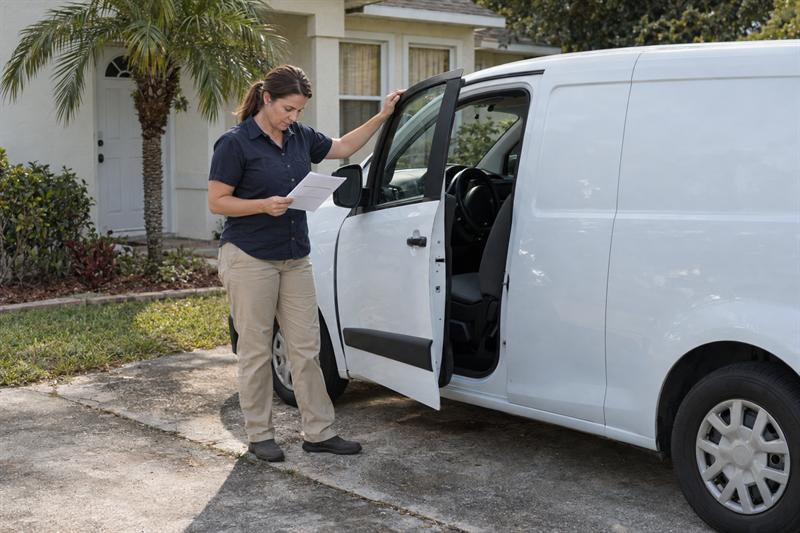
Non-owned auto usually refers to a personal vehicle used for business purposes, most commonly an employee’s car. That includes situations like driving to a client meeting, making a bank deposit, picking up supplies, or heading to a job site.
This is one of the easiest gaps to miss in small business insurance. Because the car is personal, business owners often assume the exposure stays personal too. That is not always the case. If the trip is work-related, the business can still be pulled into the claim.
Why businesses can have auto liability even without owning a vehicle
The real issue is business use, not just title or registration. A company does not need to own a work truck to create vehicle-related liability exposure.
A common pattern is that the business starts simple, then day-to-day operations change. An owner begins using a personal car for appointments. An employee starts doing supply runs. A rental gets used during a busy stretch. None of that feels like a commercial auto issue at first, which is why the gap gets missed.
If you are comparing this against broader business vehicle coverage, commercial auto coverage is the next page to review. Hired and non-owned auto helps with a narrower exposure. It does not replace a more complete business auto plan when vehicle use becomes regular or more complex.
Common situations that create this exposure
- Employees drive their own cars to job sites, meetings, or customer locations
- Owners use personal vehicles for business appointments or supply pickups
- The business rents a vehicle during a busy season or temporary project
- Staff make occasional deliveries, deposits, or errand runs for the company
- Service businesses spend time on the road without thinking of themselves as vehicle-based
These situations are common in many businesses. They also show up in companies that do not think they need auto-related business coverage at all, which is why the issue can stay buried until something prompts a review.
Why this gap is often missed
Many business owners think about insurance in terms of what the company owns. That works for property, equipment, and scheduled vehicles. It works less well for liability tied to work activity.
This also gets missed when policies are built one piece at a time. A business may already have general liability coverage and assume that covers any business-related incident. Not necessarily. Auto-related liability needs its own review, and that usually becomes clear only after operations have already changed.
What hired and non-owned auto coverage often helps with
Hired and non-owned auto coverage is generally used to help address liability involving business use of vehicles the company does not own. It is most relevant when the business relies on personal vehicles or rentals in everyday ways but has not moved into a full fleet or owned-vehicle setup.
One of the biggest mistakes is focusing on how rarely the driving happens. Frequency matters, but the larger issue is whether the trip was for work. Once business use is part of the picture, the liability question is already there.
Employee errands and client visits
One clear example is an employee using a personal vehicle for a work-related task. That might be a bank run, a client visit, a pickup from a supplier, or a drive to a job site.
This is where smaller businesses often get caught off guard. The car is not owned by the company, but the activity still benefits the company. That can lead to business liability questions after an accident, and that is the kind of gap hired and non-owned auto is generally meant to address.
Rental vehicles for temporary business use
Rental use creates a different version of the same problem. A business brings in a vehicle for a work trip, a short-term project, or a temporary replacement, then assumes the rental arrangement itself takes care of the exposure.
That is where confusion starts. Rental use should be reviewed in the context of the business’s overall coverage, because liability and damage to the rented vehicle are not the same issue.
Short-term growth, seasonal work, and borrowed routines
This usually becomes more important during growth. A company that once had informal driving habits starts sending more people into the field, taking on more appointments, or piecing together temporary transportation to keep jobs moving.
At Mad Insurance, this is a common pattern: the coverage structure may still reflect how the business operated earlier, not how it operates now. That is when a small gap can become more significant. If the business is already gathering details for a broader review, this commercial insurance quote checklist for Florida business owners can help organize what carriers often ask for.
If any of these sound familiar, the next step is usually a coverage review.
- Employees use personal cars for business errands or site visits
- The business rents vehicles during busy periods or temporary projects
- Driving for work started informally and became part of the routine
- No one has reviewed whether current business coverage matches those habits
When those signs are present, the issue is no longer theoretical. A review is likely warranted.
What this coverage usually does not cover
This is where clarity matters most. Hired and non-owned auto coverage is frequently misunderstood because people hear “auto coverage” and assume it handles every vehicle-related problem connected to work.
It does not. This coverage is generally discussed as a business liability solution, and that distinction changes what it addresses and what it does not.
Damage to the employee’s own car
Hired and non-owned auto coverage is not the same as coverage for damage to an employee’s personal vehicle. Those are separate issues.
This is a common misunderstanding. A business hears that employee driving for work creates exposure and assumes the fix covers the employee’s car itself. The real distinction is business liability versus physical damage to the vehicle.
Damage to the rented vehicle itself unless other coverage applies
The same problem shows up with rentals. Liability tied to business use of a rented vehicle is not the same thing as damage to that rented vehicle.
If that distinction gets missed, the business may think the rental exposure is fully handled when it is not. That is why rental use should not be treated as a box to check without looking at the larger coverage structure.
Why policy details still matter
Carrier forms and endorsements differ, and that is where assumptions create trouble. A business operation has to match the way coverage is actually written, not just the way the owner informally thinks about the risk.
This is why broader review matters. If a business is using hired or non-owned vehicles regularly, it usually makes sense to review commercial coverage as a whole instead of treating one endorsement like a complete answer.
Hired and non-owned auto vs commercial auto insurance
Hired and non-owned auto insurance addresses a narrower problem. Commercial auto insurance is broader and is typically needed when the business owns, leases, or regularly operates vehicles for business use.
The mistake is treating them like interchangeable options. They are not. One helps fill a specific liability gap involving vehicles the business does not own. The other is built for business vehicles and broader operating exposure. If you need a deeper side-by-side explanation, commercial auto vs personal auto insurance helps clarify when vehicle use crosses into commercial territory.
When hired and non-owned auto may be enough
Hired and non-owned auto may be enough when the business does not own vehicles but people still drive for work occasionally. That usually means employee errands, owner use of a personal vehicle for appointments, or temporary rentals rather than scheduled company vehicles.
In that setup, the issue is more targeted. The business needs help with liability tied to non-owned or hired vehicles, not a full commercial auto program built around owned units.
When a broader commercial auto policy may be needed
A broader commercial auto policy is usually needed when the business owns or leases vehicles, uses them regularly for work, or sends clearly business-marked vehicles into the field. The same is often true when vehicles carry tools, materials, equipment, or signage as part of normal operations.
If you are seeing regular business driving instead of occasional business driving, that usually means the exposure has moved beyond hired and non-owned auto alone. This is where businesses outgrow a narrow fix and need a more complete commercial auto structure.
Florida businesses that often ask about this coverage
This issue comes up across more industries than many people expect. It is not limited to delivery companies or businesses with fleets.
In Florida, it is especially common in businesses that move between clients, jobsites, properties, or appointments without thinking of driving as the core service. That is what makes the exposure easy to miss.
Contractors and service businesses
Contractors and service businesses run into this issue when owners or employees move between jobsites, pick up materials, or use temporary vehicles to keep work moving. Even when there are only a few vehicles involved, driving becomes part of the job quickly.
This is also where related business coverage questions tend to stack up. For construction-focused work, builders risk insurance for Florida projects is another area that may need attention alongside auto-related liability.
Professional offices and sales teams
Professional offices and sales teams are a good example of businesses that do not look vehicle-heavy on paper. Staff drive to meetings, inspections, banks, customer sites, and events, but the business may still think of itself as office-based.
That disconnect is exactly why the gap persists. The operation feels administrative, but the exposure develops on the road.
Nonprofits, churches, and organizations with volunteers or staff drivers
Organizations with staff or volunteers making pickups, attending events, or transporting materials can run into the same problem. The issue is still business or organizational use of a vehicle the entity does not own.
What usually gets misunderstood here is that informal routines can still create real exposure. A volunteer or staff driver doing a simple task for the organization can be enough to raise the liability question.
Questions to ask before adding hired and non-owned auto insurance
The best way to evaluate this coverage is to look at what is actually happening in the business now, not just what the business was doing when the policy was first set up. Small changes in operations are usually what create the gap.
This section should help the reader move from general understanding to a practical decision.
Who drives, whose vehicle, and for what purpose
- Who is driving for work: owners, employees, or volunteers
- Whose vehicle is being used: personal, rented, leased, or business-owned
- Why the trip is happening: errands, client visits, deliveries, site work, or temporary project use
- How often this happens: occasional, recurring, or now part of normal operations
If the answers show that driving for work is already built into daily or weekly activity, that usually means the exposure is established, not hypothetical.
Whether broader commercial insurance changes are needed
Sometimes hired and non-owned auto is the right targeted fix. Sometimes it is a sign the business has outgrown its current setup and needs broader changes across commercial auto or related liability coverage.
At Mad Insurance, the practical advantage is being able to review coverage across carriers and across lines, not in isolation. That matters because this issue rarely shows up alone. It often appears alongside broader questions about vehicle use, liability structure, and how the business actually operates day to day.
Key Takeaways
- Hired and non-owned auto insurance addresses business liability tied to vehicles the business does not own.
- The exposure usually starts when employees, owners, or volunteers drive for work in personal or rented vehicles.
- This issue gets missed when businesses focus only on owned vehicles instead of business use.
- Hired and non-owned auto does not replace a full commercial auto policy when the business owns vehicles or relies on regular business driving.
- If driving for work has become routine, the business usually needs a broader coverage review.
Conclusion
The real problem is not whether the business owns a vehicle. The real problem is whether people are already driving for work in ways the current insurance setup may not fully address.
If that issue is ignored, the gap can grow as the business grows. More errands, more site visits, more rentals, and more informal driving routines can create more exposure. What starts as an occasional exception can turn into a regular operating pattern.
Mad Insurance can help review how the business actually uses vehicles, where liability may be developing, and whether hired and non-owned auto is enough or broader commercial auto coverage makes more sense. If those driving habits are already part of the business, this is a practical time to review the coverage before the gap becomes more costly.
Company Approach
Mad Insurance approaches this issue by looking at how the business really operates, not just what boxes were checked on an earlier application. That matters with hired and non-owned auto because the exposure usually appears gradually.
A business adds employees, takes on more field work, rents vehicles occasionally, or relies on personal cars more than it used to. Those changes are easy to normalize internally, but they still change the insurance picture. Mad Insurance helps compare carriers and confirm how coverage lines up with those real-world patterns so the business is not relying on assumptions.
FAQ
Do Florida businesses need hired and non-owned auto insurance if they do not own any vehicles?
Sometimes, yes. A business can still have auto-related liability exposure even if it does not own a car, truck, or van. The issue is whether someone is driving for work, not just who owns the vehicle.
A common example is an employee using a personal car to drop off paperwork, visit a client, pick up supplies, or drive to a job site. Another is a business renting a vehicle for a short-term need. In both cases, the business can still be drawn into a liability claim connected to work activity.
The key distinction is that vehicle ownership and business liability are not the same question. That is one of the most common misunderstandings around this coverage.
What is the difference between hired and non-owned auto insurance and commercial auto insurance?
Hired and non-owned auto insurance usually addresses a narrower liability exposure involving vehicles the business does not own. Commercial auto insurance is broader and is generally used when the business owns, leases, or regularly operates vehicles for business purposes.
For example, if employees occasionally use their own cars for errands, hired and non-owned auto coverage may help address that gap. If the business owns a work truck, keeps a van on the road regularly, or has vehicles carrying tools or signage, that usually points to a broader commercial auto need.
The practical difference is scope. HNOA helps with certain non-owned or temporarily used vehicles, while commercial auto is designed around ongoing business vehicle exposure.
Does hired and non-owned auto insurance cover employees using their own cars for work errands?
That is one of the most common reasons businesses consider it. Non-owned auto coverage generally relates to business liability when an employee uses a personal vehicle for a work task.
A useful example is an employee driving their own car to make a bank deposit, visit a customer, or pick up materials between appointments. Even though the business does not own the vehicle, the trip may still be considered work-related, which is why the exposure matters.
What often gets misunderstood is that the employee’s car being personal does not automatically keep the business out of the claim. The work purpose of the trip is what changes the picture.
Does hired and non-owned auto insurance cover damage to the employee’s personal vehicle?
Not usually in the way many people assume. This coverage is generally discussed as a business liability solution, not as coverage for physical damage to an employee’s car.
That distinction matters because people often hear “covered for business use” and think it applies to every kind of vehicle damage. In practice, liability for the business and damage to the actual vehicle are separate issues.
The important implication is that hired and non-owned auto insurance may address one part of the risk while leaving vehicle damage questions to a different coverage structure.
When is a rental vehicle considered a hired auto for business insurance purposes?
In general terms, hired auto usually refers to a vehicle the business rents, leases, or temporarily uses for business purposes. The business does not own it, but it is being used in connection with work.
A simple example is renting a van for a busy week, using a temporary vehicle while another is unavailable, or renting transportation for a project or work trip. Those situations are different from an employee simply driving their own car.
The important distinction is that “hired” is tied to the business bringing in a vehicle for work use, while “non-owned” typically refers to someone else’s personal vehicle being used for business activity.
What should a business review before adding hired and non-owned auto coverage?
The most useful review starts with three questions: who is driving, whose vehicle is being used, and why the trip is happening. Those details matter more than broad labels like “we do not have a fleet.”
For example, it makes a difference whether the business only has occasional employee errands, regularly rents vehicles, or has already grown into owned work vehicles and more frequent driving. Those patterns can change whether hired and non-owned auto is enough or whether broader commercial auto coverage may be more appropriate.
The main thing to understand is that this decision is driven by actual business operations. A business with no titled company vehicles can still have a meaningful auto liability gap if work-related driving is part of the routine.

Recent Comments