
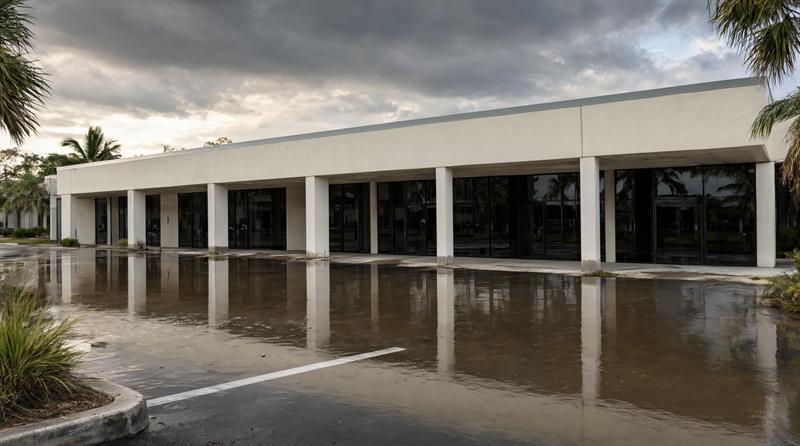
The commercial flood insurance Florida businesses are often asked to provide is a separate policy from the property coverage that sits beside it. That distinction usually surfaces at an inconvenient moment: a lender’s letter before a closing, a lease clause with a signature deadline attached, or a renewal packet that arrives after a storm has already been named. The useful work happens earlier, in a conversation about the property itself. How it is built, what sits inside it, and what a few inches of water would interrupt all shape the answers. This guide covers the questions worth bringing to that conversation, so the quote request that follows rests on details instead of guesses.
What a Commercial Flood Policy Is Really Covering
A flood policy is a separate contract. It carries its own definitions, limits, exclusions, deductibles and waiting periods, and those terms do not follow the property policy sitting next to it. Building coverage responds to the structure and eligible permanent improvements. Contents coverage is selected on its own and responds to equipment, stock and furnishings, because building coverage alone does not automatically reach what is inside the building. The agency’s Florida flood insurance coverage guide frames that split in plain language, and it is where most commercial flood questions start.
Florida adds its own context. Flood risk does not stop at the flood-zone line, and heavy rain, storm surge, overflowing canals and rising water can damage property well beyond mapped high-risk areas. FEMA consumer guidance puts the damage from a single inch of floodwater at up to roughly $25,000, which is a useful scale for a business weighing what a ground-floor stockroom or an electrical room at grade would cost to restore. A zone letter on a map describes part of the exposure. The building’s own construction, elevation and contents describe the rest.
Owner, Landlord, or Tenant: Where the Responsibility Splits
Commercial property coverage is usually reviewed in four areas: the building and eligible permanent improvements; what is inside, meaning equipment, stock and furnishings; and business income, meaning income and extra expense. Where a business sits in the property chain decides which of those areas belong to it, and a wider look at coverage areas to review by business function shows how property questions sit beside liability and workers’ compensation ones that a lease or lender may raise in the same week.
MAD Insurance keeps separate property questionnaires for owner-occupied property, landlord or lessor’s risk, and tenant or leased space, because the answers change by track. The commercial property insurance for Florida businesses page groups its questions the same way, starting with whether the reader owns the building or leases the space rather than with a coverage name. That ordering is worth following before flood enters the conversation.
When the Business Owns the Building
If the business owns the building, the structure and any eligible permanent improvements come first, with contents selected separately for equipment and stock. Business income matters here too. A building that cannot be occupied still carries taxes, payroll and debt service while repairs are underway, and that stretch of time is what the income section of a policy is written against.
When the Business Leases the Space
A lease can require flood coverage at specified limits, and a tenant’s own exposure usually sits in contents, inventory and any improvements the tenant paid for. Read that clause before signing rather than at renewal. Keep the two documents apart in your thinking: the lease decides what is required, the policy decides what responds, and the two do not always line up on the first pass.
Four Conversations Worth Having Before You Request a Quote
Four topics tend to absorb most of the time in a first flood discussion. Each one produces an answer a carrier can actually use.
The Building’s Flood History and Physical Details
Prior losses, the flood zone designation, elevation and any mitigation work already completed all shape what a carrier will consider. The agency’s flood questionnaire asks for that set directly, along with building, contents and lender information, so gathering it first keeps the opening call about coverage rather than paperwork.
What the Stock, Equipment, and Improvements Are Worth
Limits follow values, and values are the part most businesses estimate loosely. Stock turns over, equipment gets replaced, and tenant improvements fall out of sight because a contractor paid for them once. A working figure for each category gives an agent something concrete to set beside the limits a carrier offers.
Business Income and Extra Expense
A flood that closes a location does not stop rent, payroll or loan payments. Business income coverage addresses revenue that stops while a business is out of its space, and extra expense addresses the cost of operating somewhere else in the meantime. Both are worth sizing before a loss, since the amount needed is a business decision rather than a policy default.
Deductibles, Limits, and the Waiting Period
Flood deductibles can be structured in more than one way, and the difference matters more on a commercial property than on a home. The standard NFIP waiting period often applies to new coverage, with important exceptions such as certain loan-closing transactions, which makes the calendar an early item rather than a final-week one.
What to Have Ready
A quote request moves on the details attached to it. The commercial property quote checklist covers the full property set; for the flood question specifically, these items come up first.
- The building’s flood zone designation and its elevation certificate, when one exists
- A record of prior flood losses or claims at the address
- Any mitigation work completed, with dates and supporting documentation
- Inventory and valuation for stock, equipment and furnishings
- Business income figures and an estimate of extra expense
- Lease language or lender requirements that mention flood coverage
The agency accepts this information through a guided quote request or a fillable PDF questionnaire, and completing either one does not bind or make coverage effective.
Federal Program, Private Carrier, or Both
Most of the commercial flood insurance Florida business owners end up comparing comes down to two routes: the federal program and private carriers. The National Flood Insurance Program is the federal route. Private carriers may offer different limits, pricing, waiting periods or additional features, subject to underwriting. Neither route suits every building, and the comparison is worth making with the property details in hand rather than from a number quoted before anyone has seen the address.
A FEMA flood zone lookup in Florida is a reasonable starting point, since the zone designation feeds into both routes, but a map is a reference rather than an answer. A lender’s flood requirement answers only one question; it does not tell you whether the business could absorb damage from rising water. A 1% annual flood probability compounds to roughly a 26% chance over a 30-year mortgage, a figure worth holding beside a lender’s minimum rather than instead of it.
Timing: Closings, Leases, and Renewals
The policy date, not the signature date, decides when coverage starts, and flood is where that gap is most often lost. Coverage cannot be bound or changed without licensed agent confirmation, so a request that lands the day before a closing may not produce an effective date the lender expects. Work the calendar backwards from the closing or the lease start, and leave room for underwriting questions about elevation or prior losses.
Renewals are the quieter moment. A renewal is a natural point to re-read limits against a changed inventory, a new location or improvements added during the year, and to check whether the deductibles still match what the business could absorb without strain.
Key Takeaways
- Flood is a separate policy with its own definitions, limits, deductibles and waiting periods, not an extension of a property policy.
- Building coverage and contents coverage answer different problems, and contents has to be selected deliberately.
- Owner-occupied, landlord and tenant situations carry different responsibilities, so start with the property arrangement rather than the coverage name.
- Stock values, tenant improvements and business income are the figures most often left vague, and limits follow those figures.
- The effective date on the policy, confirmed by a licensed agent, is what decides whether coverage is in place at closing.
Conclusion
MAD Insurance is an independent Florida agency with offices in Pembroke Pines and Stuart, serving clients since 2013. It shops multiple carriers across personal and commercial lines, so a business can compare what different carriers offer on the same property instead of accepting a single option. Coverage decisions, including any change to limits, deductibles or effective dates, are confirmed with a licensed agent. Once the property details are gathered and the questions are written down, request a commercial flood quote and the conversation can start from firmer ground.


Recent Comments