
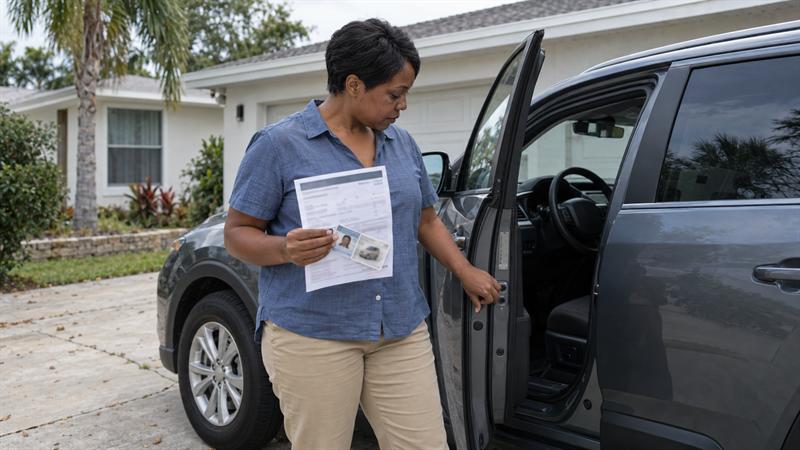
Quick Answer: The main issue with a Florida auto insurance application is starting before the key details are ready. To request a useful quote, gather your driver information, vehicle details, current policy information, and any lender or lease details before you begin.
At Mad Insurance, this is one of the most common reasons a quote slows down, changes, or becomes harder to compare. A quick estimate is easy to start, but a useful comparison depends on accurate information from the beginning.
Why preparation matters before you request an auto insurance quote in Florida
A Florida auto insurance quote often changes when the first version is built on incomplete information. This is where delays usually begin. If the driver list is incomplete, the VIN is missing, or current coverage details are unclear, the quote may need to be revised later.
The goal is not just filling out a form. The goal is getting quotes you can compare with confidence. If the information going in is uneven, the options coming out are harder to judge, even when the pricing looks simple at first.
If you want a clearer picture of available auto insurance coverage options in Florida, preparation makes the comparison more useful.
What can change a quote after the first estimate
- Missing or corrected driver information
- Updated VIN or vehicle use details
- Different current coverage limits or deductibles
- Lender or lease requirements on a financed vehicle
This is a common pattern with rushed quote requests. The first estimate looks fine, then the full details come in and the comparison changes.
The difference between required details and helpful details
Some information helps you start. Other information makes the quote more accurate. Basic driver names, vehicle basics, and your address usually get the process moving.
The details that tighten up the quote are the ones people often leave for later. That usually includes the VIN, current declarations page, exact deductibles, coverage limits, and lender or lease company information. This becomes harder when someone is trying to compare several options quickly without those details in front of them.
Basic personal and driver information to gather
Start with the drivers, not the car. A complete Florida auto insurance application usually depends on having the right people listed from the start.
Gather the full legal names of all drivers to be listed, dates of birth, driver’s license numbers, license states, residential address, and garaging location. If several people live in the household, it also helps to know each person’s relationship to the household and whether they are licensed drivers.
A common mistake is focusing on the vehicle and overlooking household driver details. That is one of the main reasons quote follow-up begins.
Information for every household driver
In many cases, the application asks about drivers in the household, not just the person who owns the vehicle. That often includes regular drivers and may include resident licensed drivers depending on the carrier and situation.
This is where confusion often starts. Someone assumes only the primary driver matters, but household details can affect how the quote is set up. If a driver is newly licensed or recently moved into the home, have that information ready before requesting the quote.
Why license and driving history details matter
Driving history helps shape quote accuracy. Accidents, violations, claims, and prior suspensions can affect how a carrier reviews the application, so incomplete or unclear history may lead to a revised quote later.
That does not mean every issue affects every quote the same way. It means more accurate driver history up front usually leads to a more reliable comparison.
Vehicle details you should have ready
Once the driver details are organized, move to the vehicle information. This is another place where incomplete applications can break down.
Have the year, make, model, trim, VIN, primary garaging address, ownership status, vehicle use, and estimated annual mileage ready if known. If the vehicle is financed or leased, identify that early because it often changes the coverage discussion.
VIN, year, make, model, and garaging address
The VIN matters because it confirms the exact vehicle. People often know the make and model but not the trim or full identifying details. That can lead to mismatches, and mismatches can lead to quote changes.
The garaging address matters too. If the vehicle is kept somewhere different from the mailing address, that should be clear in the application. Exact vehicle information makes comparisons cleaner and can reduce avoidable back-and-forth.
Financed, leased, and recently purchased vehicles
If the vehicle is financed or leased, have the lender or lease company name ready. This is one of the missing details that commonly slows a quote request.
Recently purchased vehicles can create more urgency, and that is when mistakes happen fastest. A buyer wants coverage quickly, but missing identification details or ownership information can slow the process and lead to follow-up before the quote can be reviewed properly.
Current insurance information that helps produce a more accurate quote
If you already have auto insurance, your current policy information is one of the most useful parts of the process. This is often what turns a rough estimate into a more meaningful comparison.
Have your current insurer name, policy renewal or expiration date, liability limits, comprehensive and collision deductibles, and declarations page ready if available. If there has been a lapse in coverage, that should be clear too because coverage history can affect how options are reviewed.
For readers who like preparation-style checklists, the structure here is similar to what appears in Mad Insurance guidance like the homeowners insurance quote checklist and the commercial property insurance quote checklist.
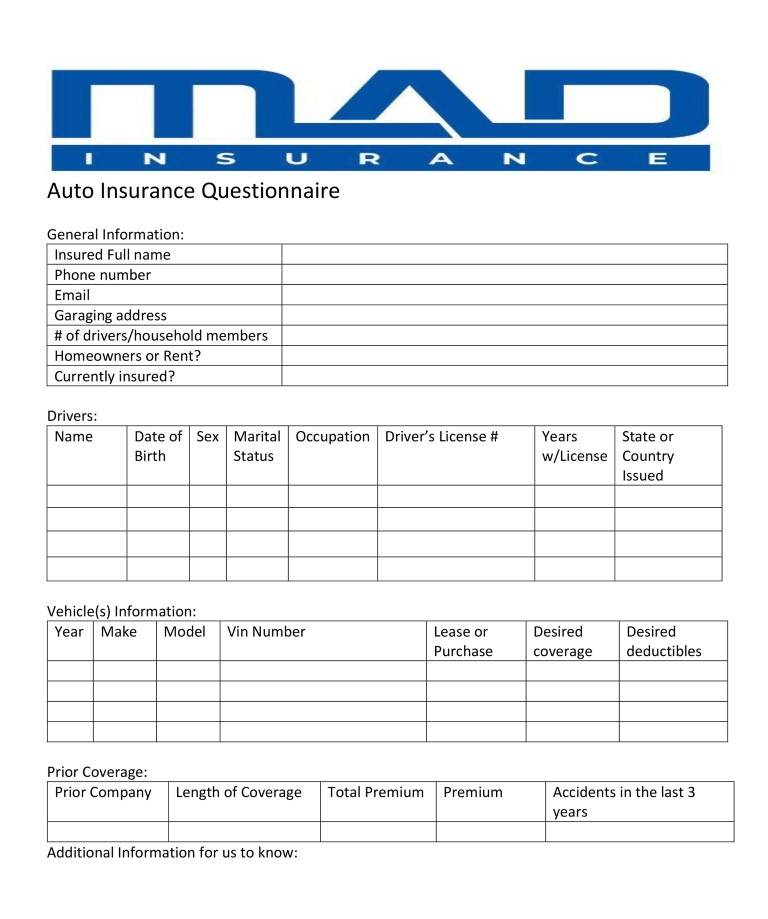
If you want to organize these details before submitting, the auto insurance questionnaire is a direct place to do it.
Current carrier, renewal date, and coverage limits
Your current policy shows what you are comparing against. Without those details, two quotes can look different on price alone while covering very different things.
This comes up regularly when someone wants the same coverage for less but does not have the current declarations page nearby. Without current limits and deductibles, the comparison can turn into guesswork.
Prior insurance gaps and why they can affect options
Coverage history matters because it helps show the full insurance picture. If there has been a gap, that can change how the application is reviewed and which quote options may be available.
The important point is not to leave the gap vague. Unclear history usually creates more follow-up, not less.
Coverage decisions to think through before you apply
Before you request the quote, decide what level of protection you want to compare. If that part is unclear, the application can still move forward, but the results are usually less useful.
The most practical approach is to think about current limits, the value of the vehicle, whether it is financed or leased, and how much out-of-pocket cost feels manageable if a claim happens. That gives the quote process direction instead of leaving every choice open.
Mad Insurance can compare auto insurance coverage options in Florida across carriers, but the comparison is stronger when your coverage goals are already clear.
Liability, comprehensive, collision, uninsured motorist, and medical payments
Liability coverage generally addresses damage or injury you cause to others. Comprehensive and collision usually relate to physical damage to your own vehicle. Uninsured motorist and medical payments are additional coverages many drivers review when deciding how they want the policy structured.
The point is not memorizing every term. The point is knowing what you want the quote to include so you are comparing similar options instead of very different ones.
Choosing deductibles based on budget and vehicle value
Higher deductibles usually lower the premium, but they also increase what you pay out of pocket if there is a covered claim. That tradeoff should be clear before the quote is requested.
An older paid-off vehicle and a newly financed vehicle rarely call for the same deductible discussion. This is where application choices start affecting real financial exposure, not just monthly pricing.
Common situations that may require extra information
Some quote requests need more than the standard checklist. These are the situations where incomplete details usually trigger the most follow-up.
Teen drivers, multiple vehicles, business use, out-of-state licenses, recently moved households, and questions about who should be listed can all add complexity. This is also where a general form becomes less helpful unless the details are organized first.
Teen drivers, multiple vehicles, business use, and out-of-state licenses
Teen drivers usually require more complete household and licensing details. Multiple vehicles mean the application needs to stay consistent across all listed drivers and cars.
Business use is a separate issue that gets misunderstood regularly. If a vehicle is used for work beyond normal personal driving, that often needs closer review because personal auto and business use do not always line up the way people expect. That is why articles like commercial auto vs personal auto insurance matter when the vehicle’s use is not purely personal.
Out-of-state licenses can also create extra questions in the quote process. The main point is that these situations are not unusual, but they do need cleaner information up front.
Households with drivers who should or should not be listed
This is one of the most misunderstood parts of an auto insurance application. People often assume they only need to think about the primary driver, but household composition usually matters more than they expect.
Carrier handling can differ, so the important thing is not to make assumptions. If the household includes licensed drivers who do not regularly use the vehicle, that still needs to be clarified correctly. This is where rushed applications often run into problems.
A simple Florida auto insurance application checklist
Here is the direct checklist. If these details are ready before you start, the quote process often moves faster and produces a cleaner comparison.
What to gather before starting
- Driver’s license information for all drivers to be listed
- Full names and dates of birth
- Vehicle year, make, model, trim, and VIN
- Address and primary garaging location
- Current declarations page if you already have insurance
- Current coverage limits and deductibles
- Lender or lease company details if the vehicle is financed or leased
- Basic information about vehicle use and annual mileage
What to verify before submitting
- Names are spelled correctly
- VIN is accurate
- The right drivers are listed
- Coverage preferences are clear
- Current policy dates and limits match your existing information
How to avoid delays or inaccurate quotes
The most common cause of delay is not complexity. It is missing details that should have been gathered before the quote request started.
Guessing usually creates a weaker result. If the driver list is incomplete, the VIN is missing, or current policy details are unclear, the quote may become a placeholder that has to be reworked later.
Common missing details
- Omitted household drivers
- Unknown VIN
- Unclear current limits or deductibles
- Missing lender or lease company name
- Uncertain vehicle use
When to ask an agent for help comparing carriers
If the household is complex, the vehicle is newly purchased, the coverage setup is unclear, or several drivers and vehicles are involved, an agent can usually help sort out the comparison more efficiently. This is especially true when the goal is not just getting one number, but understanding which options actually line up.
Mad Insurance shops multiple carriers, so this is where the process becomes more practical. Better information usually leads to a better comparison.
Next steps for requesting a Florida auto insurance quote
If any of the issues below apply, the application probably needs a few more details before it is ready.
- You do not have the VIN or exact vehicle details
- You are unsure which household drivers need to be listed
- You do not know your current limits or deductibles
- The vehicle is financed, leased, or used for business and those details are still unclear
At that point, a little more preparation usually makes the quote more useful.
Once the information is organized, the next step is simple. Use the questionnaire if you still need to gather details in one place, or move straight to the quote form if everything is ready. This keeps the process moving and can reduce preventable revisions.
Key Takeaways
- A Florida auto insurance application works best when the details are gathered before the quote request begins.
- The most important items are driver information, VIN and vehicle details, current policy details, and lender or lease information when applicable.
- The most common problems are omitted drivers, unclear vehicle use, missing VINs, and incomplete current coverage information.
- If the application starts with gaps, the quote often changes later and becomes harder to compare.
Conclusion
The real problem is not filling out a Florida auto insurance application. The real problem is submitting one before the key details are ready. That often leads to quote changes, slower follow-up, and weaker comparisons across carriers.
When the information is incomplete, the quote process can turn into correction instead of comparison. Missing drivers, unclear limits, unknown VINs, and incomplete lender information are some of the issues that create the most friction.
Mad Insurance is a practical next step when you want the quote process to be organized from the start and compared across multiple carriers with the right information in place. If you are ready to move forward, use the auto insurance questionnaire or request a quote to get the process moving with cleaner, more useful information.
How Mad Insurance approaches this process
Mad Insurance approaches auto insurance quotes as a preparation and comparison problem, not just a form-submission task. That matters because many quote issues begin before the form is completed, not after.
A common pattern is that people know the broad details but not the exact ones that shape the quote. Another is that coverage comparisons break down because the current policy details were never gathered. A third is that financed vehicles or extra household drivers add complexity that was not addressed at the start.
That is why the process at Mad Insurance works best when the information is organized first. It can lead to fewer revisions, cleaner comparisons, and a faster path to choosing the right option.
FAQ
What do you need to apply for auto insurance in Florida?
You typically need driver information, vehicle details, your address, and current policy information if you already have coverage. The most useful items are driver’s license details, full names, dates of birth, the vehicle VIN, ownership status, and your current declarations page.
The important distinction is that some details help you begin, while others make the quote more accurate. A quote can start with basic information, but it becomes much more useful when your limits, deductibles, and lender information are already clear.
Do you need a VIN to get a Florida auto insurance quote?
Not always to begin, but a VIN usually makes the quote more accurate. It confirms the exact vehicle and reduces the chance of quoting the wrong trim or configuration.
This matters because two vehicles that sound similar can still be rated differently once the exact identification is confirmed. If the VIN is missing, the quote may start, but it usually becomes less reliable until that detail is verified.
Can you get a car insurance quote without your current policy?
Yes, but the comparison is usually weaker without it. Your current declarations page helps show the limits, deductibles, and policy dates that make side-by-side comparisons more meaningful.
The common misunderstanding is assuming any quote is automatically comparable to what you already have. Without current policy details, the pricing may be easy to compare, but the coverage structure usually is not.
What information do insurers usually ask for about other household drivers?
They usually ask for the names, license status, and relationship of other household drivers because resident licensed drivers can affect how a policy is set up. This is one of the most common areas where applications become incomplete.
What gets misunderstood is that people focus only on the primary driver. In practice, household driver information often matters earlier in the process than expected, and leaving it out usually triggers follow-up.
What should financed or leased vehicle owners have ready before requesting a quote?
Have the VIN, ownership status, and the lender or lease company name ready before requesting the quote. That information usually affects how the coverage conversation is framed.
The key distinction is that financing changes more than paperwork. It usually changes which details need to be clarified up front, especially when the driver is trying to compare coverage options instead of just getting a fast estimate.
Why does an auto insurance quote change after you submit more information?
A quote changes because the first version was based on limited or incomplete inputs. Once the driver information, VIN, vehicle use, household details, or current policy information is clarified, the comparison becomes more complete.
That usually means the first quote was only a starting point. A better-prepared application leads to a quote that is more useful for making a real decision.

Recent Comments